-
FOLLOW THE FOOTSTEPS OF A REAL TRIAL LAWYER
If you want to be a trial lawyer, you might consider forgoing the big bucks offered by big law firms and consider starting your career as a Prosecutor or Public Defender. Then, instead of being stuck drafting legal pleadings, motions, and briefs a senior partner will take credit for, you will be more likely to try cases in real courtrooms. For my money, being a Public Defender will give you the best training because prosecutors too often get lazy having their cases pre-prepared for them by the police while public defenders have to fend for themselves. One of the best trial lawyers I had the pleasure of trying several cases with was Jim Smiley who started out as a Charleston County Public Defender. I remember one case in particular in which Jim’s experience and dedication won what is usually a slam dunk case for the prosecution.
It was a controlled buy narcotics case. A controlled buy works like this: someone caught selling or possessing drugs is threatened with significant jail time unless they agree to buy drugs from their supplier for the police. To ensure the buy is “controlled,” the snitch meets with the police at a predesignated location before the buy where he is searched, wired with a tape recorder, and given marked money to buy drugs from their dealer. The police observe the informant going to and from the dealer’s residence to make the buy. The informant immediately returns to the designated location after the buy and turns over the drugs and the tape recording to the police. To protect the snitch’s identity, the police wait a couple of days before arresting the dealer. A controlled buy is usually a guaranteed trial victory for the prosecution but cutting your teeth defending impossible cases is what teaches Public Defenders how to become real trial lawyers.
Jim’s client denied he sold drugs to the informant who he said gave him the marked money to repay a prior debt. Never mind what that prior debt may have been for, he refused to cooperate or plead guilty. Jim thoroughly reviewed all the reports, carefully listened to the tape of the buy, and discovered a thirty second silence on the tape that potentially blew a big hole in the prosecution’s controlled buy theory of the case. When and how he used this discovery was a master class in trial advocacy.
Jim didn’t ask many questions as the detective laid out the controlled buy playbook for the benefit of the jury on direct examination. By the time the detective finished it sure sounded to the jury like Jim’s client was guilty beyond a reasonable doubt. On cross examination, Jim began his attack. “Why do you search the informant before you gave him money to go buy drugs with?” “We searched him thoroughly to be sure he didn’t have the drugs on him.” “And, you said you watched him going to and from the dealer’s residence, why is that?” “We maintain surveillance to make sure he didn’t have the drugs hidden somewhere along the way to buy the drugs.” “And you searched him and kept him under surveillance to prove the drugs he gave you after the buy must have come from the defendant, isn’t that right detective?” “Yes, sir.”
Then Jim played the tape, with the volume turned up so everyone could hear the background noise Jim heard – footsteps. To emphasize what he’d heard, Jim paced back and forth in front of the jury box in perfect time with the muffled footsteps you could hear on the tape. Steady at first but then, all of a sudden, Jim froze like someone had yelled “red light” in the childhood game as the footsteps stopped. Jim stood frozen in front of the jury for the entire thirty seconds before starting to pace again when the footsteps restarted. He paced until you could hear the informant knocking on the defendant’s door followed by a brief hey and hi, you got the money, yeah, thanks, and see you later. Then you could hear the door close as Jim once again paced with the uninterrupted footsteps back to the detective where you heard the informant turn over the drugs and tape. When the tape finished, Jim asked, “So detective, my question to you is this, since you had him under surveillance the whole time, what was he doing during those thirty seconds when he stopped walking on his way to allegedly buy drugs from my client?”
You could see the look of panic on the detective’s face as he looked towards the prosecutor who was just as surprised as he was. Finally, the detective was forced to admit he was parked down the street to avoid being seen and the informant wasn’t in his line of sight when he walked around the corner of another building in the dealer’s apartment complex. Jim pressed his advantage, “Well, he knew the location this buy would go down because he’s the one who gave it to you, isn’t that right detective?’ “So he could have hidden some drugs there and picked them up after you searched him, couldn’t he?” “So, since you couldn’t see him when he went around the building, you don’t know what he was doing during that missing thirty seconds he was out of your sight, do you detective?” “And from all you or anybody else can tell from the tape, the informant could have been giving him the marked money to repay a debt owed to my client for some other reason, couldn’t he?”
Just like that the detective and prosecution lost control of their controlled buy case because of Jim Smiley’s hard work and experience . He showed the buy wasn’t controlled and, therefore, the prosecution had failed to prove his client’s guilt beyond a reasonable doubt. Just as important as the missing thirty seconds on the tape, was how Jim was able to demonstrate it and its significance for the jury. That level of trial advocacy can’t be taught in a law school classroom; it can only be learned in a real courtroom. If you want to become a real trial lawyer, you might consider beginning your career in a job that will actually give you some real trial experience.
-
WINNING
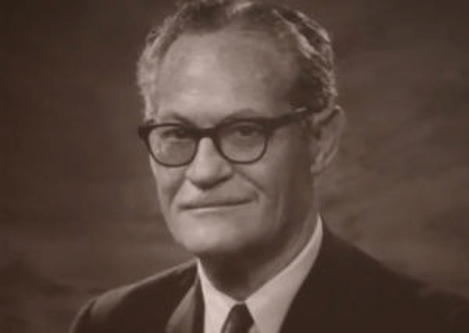
Irving Steinberg
Irving Steinberg never let a little thing like childhood polio hold him back, he went on to become a lawyer. When he opened his law office at 61 Broad Street in downtown Charleston in 1927, he never let a little thing like antisemitism hold him back either, he built a successful law practice representing clients other gentile lawyers wouldn’t represent. He helped draft and pass the Workers’ Compensation Act in 1936 protecting all South Carolina workers. He helped organize the churches during the struggle for civil rights becoming a member of the politically powerful Broad Street Ring of lawyers. And, somehow he found the time to mentor a very young lawyer showing him the true meaning of winning .
As a new associate in Irving Steinberg’s law firm, he asked me to accompany him to a worker’s compensation hearing in Dorchester County. He gave me his keys and sent me to fetch his car parked at Batson’s, the last service station in downtown Charleston, where only Mr. Steinberg was allowed to park. Mr. Batson, wearing his signature pith helmet, had Mr. Steinberg’s white Cadillac Eldorado convertible, with red leather interior, all gassed up and the top down ready to go before I got there. Not recognizing me meant Mr. Batson had to give me a long speech telling me how lucky I was to be working for Mr. Steinberg while I became more and more anxious not wanting to keep Mr. Steinberg waiting. I finally got away and picked Mr. Steinberg up in front of the office. He jumped into the passenger seat and told me to head for the interstate. It was a beautiful day that no one enjoyed more than we did riding out of town in Mr. Steinberg’s Eldorado with the top down.
The hearing wasn’t scheduled until later that afternoon and I wondered why we were leaving so early. First stop was a little corner store off the side of the road in the tiny town of Dorchester, South Carolina where Mr. Steinberg was greeted like Hollywood royalty. He talked for a good forty-five minutes with the store owner. As I waited with the car drinking a coke word of Mr. Steinberg’s visit must have spread as children began to appear out of nowhere just to get a look at him. Finally, after laughs, hugs, handshakes, and endless pats on children’s heads, we were on our way again but still not heading to the hearing. Next stop was a lawyer’s office in downtown St. George where Mr. Steinberg spent a good hour politically strategizing and shoring up a long-standing client referral source. Mr. Steinberg had a quick wit and kept the lawyer laughing throughout their meeting but, as with the store owner, I could tell there was a true bond of friendship between them.
Finally, it was time to drive to the hearing. We arrived a good half hour early. To my surprise Mr. Steinberg told the Commissioner he’d settled the case with the insurance adjuster. The Commissioner was glad to hear it but told Mr. Steinberg, that being the case, there was no need for Mr. Steinberg to have made the trip. Mr. Steinberg disagreed, saying he had other business in the area and how he was always glad to see the Commissioner reaffirming their friendship as well. He then explained to the Commissioner when the hearing was called, he was going to ask that the Commissioner award his client a twenty percent disability to her foot, the adjuster would argue for five percent based on the doctor’s impairment rating, and the Commissioner should then award his client fifteen percent, the amount he and the adjuster had agreed upon to settle the case. By this time the adjuster had arrived with the clincher settlement agreement and check in hand, agreed to the settlement, and jokingly accused Mr. Steinberg of highway robbery. Mr. Steinberg jokingly shot back accusing the adjuster of being a miserly skinflint and said he was lucky to be getting off so easy. The Commissioner, adjuster, and Mr. Steinberg all had a good laugh. About that time, Mr. Steinberg’s client arrived and Mr. Steinberg asked to speak with her outside.
We went outside and Mr. Steinberg uncharacteristically fussed at his client, asking her, what are you doing? The bewildered client didn’t know what to say. Mr. Steinberg told her to untie the shoe and instructed her on how to limp around on her left foot as he explained how the no-good, good for nothing company doctor had only given her a five percent rating to her foot but he knew the Commissioner and was going to get her way more than that. So, back into the hearing we went. The client limping on her untied left shoe, Mr. Steinberg passionately arguing she was entitled to a twenty percent award, and the adjuster just as emphatically arguing for the doctor’s rating. The Commissioner complimented both of them for their fine advocacy on behalf of their clients and, following the script, awarded Mr. Steinberg’s client fifteen percent. The actual hearing didn’t take five minutes. The clincher agreement was signed by the client, signed off on by the commissioner, and the settlement check delivered to Mr. Steinberg. Everybody was happy and hands were shook all around. The adjuster knew Mr. Steinberg probably could have gotten twenty percent and was glad to close his claim without having to hire a lawyer. The Commissioner was glad to have a free afternoon and clear another case off his docket. Mr. Steinberg’s client thought Mr. Steinberg hung the moon and she was right. And, me, well I learned what real winning in a courtroom looks like. A good lawyer leaves the courtroom with a smiling client. A truly great lawyer leaves with everybody smiling.
-
WE ARE ARMED AND WILL USE FORCE
The local narcs could never catch the east side curb side drug dealers who had look outs and would scatter before the narcs could get close to them. So the narcs staked-out the dealers to catch College of Charleston students buying weekend party supplies. They would observe a sale and radio a description of the student’s car to waiting police cruisers who would blue light the students for minor traffic offenses as a pretext to search for the drugs they already knew they had. One Friday evening, the narcs observed a car pull up and exchange something with a dealer. An alert went out over the police radio, “green Mustang 5.0 just pulled up and bought something.” A more seasoned supervisor quickly squawked back over the radio, “Never mind, that’s just Bobby Howe picking up his fee for the weekend.”
Although Bobby much preferred cash, his easy payment plans for criminal fees were as flexible as his office accounting system. Some of his fees I recall included a new screen porch on the back of his house, a built-in sauna, a gigantic jacuzzi tub, new hardwood floors, and more rooms painted than the Plaza Hotel but the fee of his I want to write about this morning involved ten gallons of top-secret anti-fouling black paint the Navy used on nuclear submarines.
Bobby had a bad habit of leaving his 17 foot 1963 Boston Whaler tied up to whatever dock he ended up at after a long, hard day partying out on the water. The factory installed blue anti-fouling paint had long since lost its effectiveness, so he’d often end up having to spend hours scrapping barnacles off the bottom his boat by hand at local car washes. He figured the submarine paint was worth a fee because it would last forever and he never gave a second thought to it being highly illegal for anyone to possess any.
Bobby being Bobby could hardly wait for the submarine paint to dry before taking his boat out for a shake-down cruise in the harbor. He was still dressed in his suit slacks and white shirt as he rode full throttle across the harbor in the late afternoon sun. There’s no telling what other contraband may have been on board when the military style speed boat with a 50 caliber machine gun mounted on the bow pulled up alongside and the captain, dressed in full military body armor, began hailing him over a megaphone. Bobby thought he heard, “We are armed, and will use force!,” so being Bobby he kept looking straight ahead and kept going at full speed. Again, he heard, “We are armed and will use force.” What? Over a couple gallons of lousy paint Bobby thought to himself but, not wishing to be machinegunned to pieces, he decided to throttled his engine back and talk his way out of it. When the military craft slowed alongside, he heard the captain actually ask, “Are you a member of the Orange Force?” Confused, but relieved at the same time, Bobby replied, “Well, no, officer, I was just out test driving my new paint job.” Before he could regret mentioning the paint, the military craft sped off in another direction. It turned out Bobby had gotten himself tangled up in a military training exercise on securing Charleston harbor in the event of a terrorist attack.
Bobby’s father nicknamed him Cat because cat’s have nine lives but I’m afraid his father seriously underestimated the number of lives Bobby would run through. Whatever number that number may have been, he was clearly down another life because of this submarine paint fee. He lost that 63 Whaler in Hurricane Hugo, so we never found out how long that illegal submarine paint would keep the barnacles off the hull, but I’ll just bet, like Bobby himself, nothing ever stuck to it.
-
KEEPERS
My friend, Bobby Howe, the Plea King of the Charleston County Court of General Sessions, was without a doubt the quickest lawyer on his feet I ever met. He once put me in a case representing a husband and wife charged with trafficking more than 100 grams of cocaine. That’s Trafficking 3rd Degree, a violent felony carrying a mandatory twenty-five years in prison, no probation, no parole. To boot, they were also charged with possession or distribution of drugs in the proximity of a school, also a violent felony carrying fifteen years on top of the underlying drug sentence. To put it in legal terms, they were in some really deep shit.
What they really were “keepers” in the parlance of the drug trade. They kept the real trafficker’s cocaine in their house for safekeeping, literally in a safe only the trafficker had the combination to open. They were chosen for the job because they had no prior records and neither of them used or sold drugs. The husband worked a legit 9 to 5 job while the wife was a student at Trident Tech studying to be a phlebotomist. And how much were they paid to be keepers? Not much more than the free rent on their nice home. It seemed like a good deal to them because they mistakenly thought, as long they weren’t actually doing the dealing, they’d be safe too. They thought that right up until they were led out of their nice home in handcuffs following the execution of a search warrant by the Drug Task Force that found the trafficker’s couple kilos of cocaine they were keeping safe in his safe.
I wasn’t privy to where Bobby got the sizeable fee we were paid but was glad for the referral. We reviewed the search warrant and found it was solely based on information provided to the Drug Task Force by a “confidential reliable informant.” We naturally asked our clients who knew what they were doing and both said they never told anybody they were keepers to keep from being robbed or worse themselves. From that we logically deduced it was the actual dealer who was the informant. He’d probably been caught dealing and offered a deal in exchange for him ratting out the person he got his drugs from.
Thus began the legal battle to compel the Drug Task Force to disclose the identity of the so-called confidential reliable informant. The law recognizes the government has a privilege to withhold the identity of confidential informants; however, it is not an absolute privilege. A court can order disclosure when required by fundamental fairness. The United States Supreme Court held the courts must balance the need to protect informants and to encourage citizens to provide information to police against the defendant’s right to prepare and present a defense. The privilege is most frowned upon when the informant was a participant in the alleged crime, the only witness relied upon obtaining the warrant, and it can be shown the informant may have information establishing the defendant’s innocence.
The Task Force steadfastly denied the dealer was the informant forcing us to file a formal motion to compel his disclosure. As the date for a hearing approached, the Solicitor assigned to prosecute the case requested a meeting. He conceded our clients might be patsies but maintained, even if we were right about the dealer being the snitch, our clients would still be guilty of the crimes alleged and still be facing the minimum, mandatory sentence of twenty-five in prison. Bobby just smiled sensing the makings of a plea bargain. After some back and forth Bobby negotiated a sweetheart deal for our wayward couple. The clients would plead to Trafficking, more than ten but less than twenty-eight grams, still a violent felony but only carrying from three to ten years and eligible for parole and also plead to possession or distribution of drugs in the proximity of a school, carrying up to fifteen years but also eligible for parole, with the sentences to run concurrently. Furthermore, Bobby could pick which judge he wanted to plead before.
Bobby explained to our clients, if we lost our motion, they would almost certainly have to serve the mandatory twenty-five-year sentence, while, if they took the plea they could serve as little as three and a third years before making parole. Probably a little on the rosy side as legal advice goes but arguably within the realm of possibility. Being young kids scared to death of spending eternity in prison, they wisely decided to accept the plea.
Bobby picked the Honorable Richard E. Fields to plead before. Judge Fields was an old family friend who genuinely loved Bobby. While it no longer mattered since our clients were pleading guilty, Bobby still argued to Judge Fields it was probably the real dealer getting away scot-free who ratted out our clients. We both, Bobby for the husband, me for the wife, emphasized our client’s young age, lack of a prior record, and sincere remorse for getting themselves involved in such a serious crime. Judge Fields spoke nicely to our clients and almost apologized to them for having to impose concurrent sentences of ten years for Trafficking 3rd Degree and seven years for the proximity charge. As we let out a big sigh of relief and turned to leave, Judge Fields almost apologized to us and said under his breath, “I couldn’t do any better than that.”
This is the part of the story where Bobby being quick on his feet paid off for our clients. Without skipping a step, Bobby performed a perfect pirouette in the courtroom, turned back towards the judge and said, “Well, Judge, since you asked, Trafficking 3rd degree is still considered a violent offense under Code Section 16-1-60 requiring that they serve one-third of the sentence, or three and a third years, before being eligible for parole, so if you gave them the same sentence but switched the ten years you gave them for the trafficking charge with the seven years you gave them for the proximity charge, it would be the same sentence but they’d only have to serve two and a half years rather than three and a third years before being eligible for parole the way the way the sentence is now.” It surprised Judge Fields so much he revised his sentence the way Bobby requested.
Back at the office, it took me a pencil, paper, calculator, and a good five minutes to calculate what Bobby had calculated in his head in the time it took him to turn around. My dear friend may have at times needed remediation on the law, procedure, and evidence, but he was lightning fast on his feet in a courtroom. Any reasonable lawyer, me included, would have been thanking their lucky stars for the incredible deal we’d gotten our oh so guilty clients, but not Bobby. He made a great deal even better so fast it would have made your head spin as fast as he spun around in the courtroom that day.
-
BEING A FLEDGLING LAWYER
One of my favorite things to do, now that I’m retired, is watch the fledglings learning to fly, frantically fluttering their wings trying to land on the birdfeeders in our garden. They remind me I was once a fledging lawyer frantically trying to fly myself. I was first shoved from the nest by Jack Swerling who sent me out on my own to cover a preliminary hearing in an Assault and Battery with Intent to Kill, ABWIK, case.
The hearing was scheduled to be heard before Magistrate Mattie Simmons in the Olympia Magisterial District located on Bluff Road out past Williams Brice football stadium. I was given the assignment and handed Jack’s file five minutes before leaving and learned the client was accused of discharging a shot gun into the open driver’s side window of the victim’s pick-up truck. Jack’s notes said the victim was beating a hasty retreat after having been caught cheating in a poker game and our client merely fired a warning shot in his direction.
Even a fledgling lawyer like me knew you can’t admit shooting a shotgun at somebody but deny you meant to kill them. I was still wondering what I was supposed to do as I drove up the Magistrate Court’s parking lot packed with pick-up trucks and stepped out into the oppressive heat of a late August afternoon.
The tiny cinderblock courtroom was stifling hot and packed with people. Seems everyone in the community was either kin to the defendant or the victim or had been playing in the poker game that led to the shooting. I saw the judge sitting by herself in her black robe behind a tiny desk at the front of the courtroom. Although I didn’t know at the time Article V, Section 26 of the South Constitution provided magistrates were appointed by the Governor with the advice and consent of the Senate or that the process was controlled by “senatorial courtesy,” meaning the Governor would appoint whoever the local senator named who would be affirmed by the Senate as a courtesy to their colleague, but I instinctively introduced myself to the judge saying I worked for Senator Isadore Lourie. She greeted me warmly and graciously granted my request for a few minutes to confer with my client.
I’d never met the client but figured, being the only idiot in a jacket and tie in the sweltering heat, he’d find me. It didn’t take long and as I was getting ready to ask him one of the hundred or so questions I’d thought up toask him, he interrupted to tell me he’d settled his differences with the alleged victim who now wanted to drop the charges. I didn’t know the man standing next to our client was the victim until he chimed in saying,” that’s right.” Fortunately, the victim had the weathered face of a farmer which showed no signs of having been shot by a shotgun. I asked them for a few minutes to confer with the judge.
I headed back to the front of the courtroom where Judge Simmons remained sitting, fanning herself. When I told her the victim wanted to drop the charges, she said, “Oh, no, no, no. I can’t have people shooting each other in my district.” Not knowing any better, I asked what I thought was a stupid question if there was anything my client could do to resolve the situation. Judge Simmons thought long and hard sitting there fanning herself with her black robe unzipped to about her navel revealing her enormous breasts covered in a white bra. Finally, she suggested if our client turned in his shotgun, she’d agree to dismiss the charge. She again graciously granted my request for a few minutes to confer with my client.
For those of you who may not know, ABWIK was a felony carrying up to twenty years in prison. I thought I’d pulled off a miracle and couldn’t wait to tell our client the good news of my total victory my first time out the blocks. Again, however, my client had other ideas and rejected the judge’s plea offer saying it would soon be deer hunting season and he needed his shotgun. I was dumbfounded but, more by dumb luck than anything else, asked what I thought was a second really stupid question, “how many shotguns do you own?” When he said three, I heard the solution to the impasse and suggested maybe he could just give up one shotgun. He agreed but only on the condition he could get it back after hunting season. Again, I asked for a few moments to confer with the judge.
This time Judge Simmons agreed and, although I saw no signs of recording equipment, I made a show of placing the agreement “on the record” for the benefit of the packed courtroom. The murmuring strongly indicated approval of the agreement and the courtroom emptied. My client thanked me but wanted to make sure I told the Senator how much he was appreciated by everyone for all his good work.
It was the next morning before I could tell everyone back at the office of my brilliant victory, but they all acted more like the outcome was a foregone conclusion. Chief, as I called Senator Lourie, was more interested in the client’s message of future political support while Jack, at least, gave me a pat on the back for a job well done. I probably felt a little like a pawn in a game I hadn’t realized I was playing but still felt like the dismissal of a serious felony at the preliminary hearing was a feather in my cap and there were lessons that I’d learned. Never give up. Keep trying and often you can find a solution to even an impossible problem. And, just as important, the only stupid questions are the ones you don’t ask. I didn’t know it then but soon enough; I’d be flying on my own.
-
MY LAST MURDER CASE
Maybe you’re wondering how I could have handled so many murder cases, with a seemingly good track record, without anybody reading about me in the newspaper or seeing me on the evening news? It’s because of some sound legal advice I received from a very good lawyer I chanced meeting on my way into the Richland County courthouse between the time I took the South Carolina bar exam and I found a job. When I decided to go down to the courthouse to watch real lawyers doing what real lawyers do.
To my great good fortune I ran into I. S. Levy Johnson, Esquire, at the courthouse. I didn’t know who he was at the time and, when I asked him where I could watch the real lawyers in action, Mr. Johnson, who always had a humorous glint in his eye, almost burst out laughing at my new naiveite.
He put his hand on my shoulder and said, “Son, its Monday morning, and the real good lawyers avoid the courthouse like the plague. They avoid the courthouse because its filled with gung-ho judges determined to assert their bona fides in the war against crime, puffed up prosecutors perpetually running for office, newshounds looking to stir the pot, and victim’s rights advocates beating their own drums. If you want to catch the real lawyers at work, you’d best come back around about Thursday afternoon. Come back after the judge has given all his fire and brimstone speeches and purged himself of the urge for retribution. When the prosecutor just wants to move his backlogged docket, the newshounds have met their deadlines for the week, and, after the advocates have faded away having lost interest. That’s when the real lawyers show up to ply their craft. I took his advice to heart and tried my best to stay out of the spotlight as much as I could over the course of my career.
Retired now, I no longer feel constrained writing about my murder cases and will tell you about my last murder case nobody ever heard of. It began when my client’s unemployed, sometime boyfriend coming over to her house one night, as he did whenever the mood struck him, and she welcomed him in, as she often did, to relieve the monotony of her daily life. You see, at barely nineteen years old herself, she was stuck living at home watching for her younger brothers and sisters and caring for her disabled grandfather so her mother could work double shifts at a downtown hotel doing housekeeping. She dreamed a lot of dreams for herself, but never dreamed she’d be charged with murder.
This particular morning, her boyfriend noticed the family car parked in the driveway and said he needed to borrow it so he could take care of some “business.” My client told him no because she had to take her grandfather to his doctor’s appointment later that morning. He got angry and started looking around the house for the car keys. He got madder and madder when he couldn’t find them. Thinking they might still be in the car, he went out to check and my client hastily locked the door behind him. This pissed him off even more when he tried to get back in causing him to bang on the door and threaten my client if she didn’t open it.
She refused and watched helplessly as he walked back over to the family car, picked up a rock, and yelled he was going to smash out the windshield if she didn’t give him the keys. She grabbed a kitchen knife and stepped out into the yard to tell him to stop or she’d call the police. When he saw her holding the knife, he came towards her aggressively asking, “What? You gonna stab me with that?” To his great surprise, that’s exactly what she did. She stabbed him once in the groin severing his femoral artery. She did call the police but he bled out before the police or ambulance could arrive.
To the police it looked like she stabbed her unarmed boyfriend, so they charged her with murder and her poor mother hired me to defend her. To be honest, my last murder case didn’t turn out to be much of a case after all and I was able to get it dismissed before it ever got started. I was able to get Judge Kristi Harrington, the judge in my Gansta Style case, to dismiss the case under the South Carolina’s Protection of Persons and Property Act that changed the law of self-defense in a couple of important ways.
First, you no longer have to prove you fear for your life to justify the use of deadly force. The new law presumes you fear for your safety anytime someone threatens you on your own property. And, second, you no longer have to retreat before you can use deadly force. You can stand your ground to protect your home and property.
The prosecutor argued the boyfriend hadn’t broken into my client’s house, he was invited in. I argued, although he’d been invited into the house the night before, he was subsequently locked out and told to leave. The solicitor argued he was unarmed and their domestic dispute didn’t warrant the use of deadly force. I argued she was entitled to, but didn’t need the presumption of fear, because she was on her property when he threatened her and approached her aggressively.
The most important aspect of the new law is, it not only strengthened the defense of self-defense, it granted immunity from prosecution. Judge Harrington agreed with my arguments and dismissed the case outright without the need for a trial much to my client’s relief. The media rarely covers motion hearings in criminal court and not a word of my victory appeared in the media.
It was a fitting end to a fifty-year career as a criminal defense attorney and I think Mr. Johnson would agree, that’s all a real lawyer should care about. My advice to anyone based on my experience is, if you have a lawyer who thinks your case is their ticket onto the front page or the evening news, you probably need another lawyer.
-
SHAD AUP! I’M TALKIN’ TO DA LAWYER…
My client was in the logistics business of transporting contraband around the southeast in horse trailers loaded with big, mean horses. He told any troopers who happened to pull him over they were broncs bound for a rodeo dissuading any urge to search the trailer. His ploy worked so well he earned enough to buy himself a beautiful horse farm way out in Colleton County. The only thing he loved more than his farm was his wife. When she broke her back in a single car wreck, he took her all the way to the Ochsner Medical Center in New Orleans for the three-level spinal fusion surgery she needed that South Carolina doctors were too scared to perform. When she recovered from her surgery, he brought her in to see my partner, Malcolm Crosland, and me about her case. She won us over immediately, being as sweet and as country as a drop girl could be. When we’d call to talk with her about her case, her husband would try to butt in on the conversation, and she’d holler on the phone, “Shad aup! I’m talking to da lawyers.” She was just the kind of client a Colleton County jury would undoubtedly love to pieces.
Problem was by all accounts the wreck was her fault. Nobody ran her off the road and there was no mechanical breakdown. She just ran off the road and flipped over into a ditch. Fortunately for her, my partner, Malcolm, was the kind of lawyer who never gave up fighting for his clients. If you asked him for an elephant, he’d bring you a whole circus.
He somehow found a highway construction expert qualified not only to tell us what happened to cause our client’s wreck but who was responsible. His detailed report pinned the blame squarely on the paving company that left a four inch drop off on the side of the highway they’d just repaved. They were supposed to have backfilled the drop off but didn’t and his report explained how that caused our client’s wreck.
When our client drifted over to the edge of the roadway, her tire deformed and literally pulled her over the edge. When she tried to steer back onto the road surface, her tire “scrubbed” along the drop off unable to climb back up until she overcorrected to a critical angle when her tire caught and vaulted her back up onto the highway. Most often incidents of this nature cause head-on collisions but, with no oncoming traffic, our client shot all the way across the highway and rolled over into a ditch on the other side. It is a well-known and documented danger in the road construction industry as shown in the expert’s report citing peer reviewed engineering studies dating back to the Ford Model T.
We filed a negligence action against the paving company which had plenty of insurance coverage. It didn’t take long for the paving company’s lawyers to figure out they were toast on the issue of liability, so they decided to switch gears and attack our sweet client’s credibility. Their attempts proved feeble and, quite honestly, started to piss the jury off. That’s when the desperate defense lawyers got the bright idea to stoop to a new low. They called an off duty, African American police officer to testify. He testified he didn’t see the wreck but came up on it right after it happened and jumped down into the ditch where our client was hanging upside down in her car to offer help. He sure sounded like a good Samaritan but then he testified our client clutched her jewelry hanging from her neck when he stuck his head in to ask if she was all right.
In every lawyer’s practice the time will come when a pompous opposing counsel, a lying witness with an axe to grind, or just some plain old racist, sexist, or some other kind of istist, will say something that shows his or her true colors. In our case it came when the defense lawyer called the police officer he apparently had some connection with. I saw immediately what he was up to. I stopped and let the silence highlight for the jury that something important had happened. Then I asked the officer in a calm, level voice, “What inference is it you want the jury to draw from your testimony she clutched her jewelry?” It caught him off guard. He didn’t want to outright accuse our sweet client of thinking all black people were robbers for the benefit of the five African American jurors on our jury. All he could do was hem and haw around about how the jury could make of it whatever it wanted. So, I asked again and let the weasel squirm while the jury figured it out for themselves.
The defense lawyer’s witness backfired spectacularly. We got a very good verdict for our Colleton County sweetheart from our Collewton County jury. And we still get a good laugh every time one of us says, “Shad aup! I’m talking to da lawyer!”
-
DON’T BE A “KNOW-IT-ALL LAWYER AND LEARN WHAT YOU’RE MISSING
The mother of a young woman who’d been stabbed to death came to see me. Her daughter tried to end a relationship with a possessive and violent man. When she said she was breaking up with him, he started calling incessantly. When she called the police, they said they couldn’t do anything unless he threatened her and suggested she get an unlisted number. When he learned her old number had been disconnected and her new one was unlisted, he came over to her apartment and cut her phone wires. When she called the police that time they said they couldn’t do anything unless she had evidence he cut the wire and suggested she take out a restraining order against him. She did and, when she caught him lurking around her apartment and threatened to call the police, he beat her up pretty badly. This time when she called the police they took pictures of her black eye, busted lip, and bruises and obtained a warrant for his arrest charging him with ABHAN, assault and battery of a high and aggravated nature, a felony carrying up to twenty years.
When he was arrested and held in the County jail, his Public Defender requested a preliminary hearing before a magistrate to determine whether there was probable cause to believe he committed the offense Probable cause is a very low burden of proof which surely would have been met based on her photographs and identification of the defendant, but the police failed to show up for the hearing. The magistrate dismissed the charge and ordered the defendant released from custody. Upon his release, he went straight over to the young woman’s apartment and killed her. Her mother was devastated and outraged her daughter, who had done everything she was supposed to, had been killed. When she came to see me, I was outraged too and I filed a wrongful death action against the police under the South Carolina Tort Claims Act, SCTLA. I thought I had a slam dunk case but I had no inkling how much I didn’t know.
The police department’s lawyer filed an answer to my lawsuit that was an education in itself. It seems when the legislature waived sovereign immunity to allow the State and political subdivisions to be sued, they included all manner of exceptions to liability including liability for the failure to enforce the law and for discretionary acts by police officers. Apparently it doesn’t matter much anyway as whatever duty to act the police may have it is a duty owed to the general public, not specific individuals, and police action or inaction is never the proximate cause of injuries to the victim’s of criminal acts. But, hold on a minute, I said I was ignorant, not stupid.
I know enough to know when to ask for help and knew my former father-in-law, Morris Rosen, used to be the attorney for the City of Charleston, so I asked him about my case. He gave me some of his always sound advice by introducing me to his daughter-in-law, Susan Rosen, who turned out to be one of the finest lawyers I ever worked with on a case. So good, I don’t think we ever had to try a case together because they all settled. Susan reviewed the pleadings, we discussed the case, and she agreed what had happened to our client’s daughter was indeed outrageous. She immediately eased my anxiety something I didn’t know had sunk my case.
Susan calmly explained not everything a policeman does is discretionary and she was pretty sure not showing up for a court hearing without explanation was one of them. That didn’t amount to administrative action or inaction either because it did not involve policy choices. Susan’s knowledge of and experience got us through summary judgment and the case settled soon afterwards.
I wish I could tell we settled for what the case was worth, but damages under the SCTCA were capped at $200,000.00 and the settlement offer made was near enough to it, the mother decided to accept it. It was never about the money to her and she had little desire to wait another year and a half for trial. In addition to my half of the fee we earned, I got to know Susan Rosen who went on to build a reputation for being an excellent medical malpractice attorney. I didn’t know any more about med mal cases than SCTLA wrongful death cases, so you can safely bet I knew where to turn for help whenever I got one.
The lesson to be learned is not to let yourself become a “know-it-all” lawyer. I don’t care how smart you may think you are, remember it’s what you don’t know that will get you in the end. Don’t be afraid to ask for help and learn how to become a better lawyer than you could ever become alone.
-
DOWNRIGHT LOWDOWN DIRTY
My client was a brilliant Ph.D. biomedical scientist who was highly recruited by the Medical University of South Carolina to conduct medical research studies. A native of Tiawan, he spent years climbing the academic ladder at some of our nation’s best colleges and universities before moving his family to the Charleston area. He wanted to put down roots in and bought a modest home in a new Mt. Pleasant subdivision. He also bought the homebuyer’s warranty offered by the developer to protect his investment.
He soon discovered his home had been built below the FEMA approved base flood elevation and flood insurance on his new home was going to cost a small fortune every year. His warranty company summarily rejected his claim for compensation on the grounds a home being built below the base flood elevation wasn’t a construction defect covered under the warranty. The warranty provided he could request AAA arbitration and he did. He represented himself and, as you might imagine, as a Ph.D. scientist he was well prepared and had his claim well documented. He won the arbitration and thought the problem had been solved until he received a certified letter from the warranty company saying they were filing an appeal to an appellate arbitrator.
My client wasn’t stupid and didn’t see any provision either in his warranty document or in the AAA’s arbitration rules granting the losing party the right to appeal. He came to see me, and I didn’t see one either, so I signed him up, and sent a strongly worded letter to the warranty company threatening legal Armageddon if they didn’t abide by the terms of the award. When they blew me off, I filed a lawsuit against them alleging breach of contract, bad faith, a violation of the Unfair Trade Practices Act, and fraud. They responded to my lawsuit by hiring a high-powered, below Broad insurance defense law firm and they filed a blistering answer calling my complaint frivolous, raising defenses I’d never heard of before, and demanding my lawsuit be dismissed, with prejudice, and costs.
According to them, I was trampling on the 1925 Federal Arbitration Act, the “well established” federal policy favoring arbitration, and my entire lawsuit was premature because arbitration was still ongoing. I decided I needed some high-powered legal help of my own and knew a lawyer named Bill Bundy who was a carpenter before he went to law school and practiced construction law, so I contacted him about my case. He said I needed his senior partner, Ellison D. Smith, IV, because Ellison knew all about my kind of case.
I was Ellison’s neighbor on Sullivan’s Island and knew his reputation for being an excellent lawyer, but I really didn’t know him personally. I followed Bill’s advice and met Ellison to discuss my case. I was surprised when he said he didn’t know anything about cases like mine because he’d never seen one like it before. I felt a little better when he said he’d never heard of an appellate arbitration either. As we discussed my case further, he got what I can only describe as a gleam in his eye, much like I would imagine a grand master chess champion would get thinking ten or twenty moves ahead in a game and seeing checkmate. My gaming analogy was more apt than I realized as I soon learned litigation was indeed a game to Ellison. A game we were about to have more fun playing than just about any other case I ever tried.
As the written discovery progressed, our case just kept getting better and better. The more we learned, the more it became apparent the so-called homebuyer warranty was really just an elaborate scheme to limit the developer’s liability for any screw-ups on his part. In effect, the homebuyer warranty got the homebuyer to paying for the developer’s insurance while at the same time limiting the damages he could recover and giving up his right to a jury trial.
When the time came to take depositions, hotheaded me was itching to lay out the whole scheme and expose it for exactly what it was. But Ellison counseled a different approach. A young lawyer tends to come out swinging at everything, he said, but, in a real fight, covering up is every bit as important as trying to land punches. The defense lawyers wanted to throw the land surveyor under the bus and claim he was solely responsible for the elevation error. He was more than willing to fall on his sword to save his main source of income. I wanted to show the problem with their argument was this was Phase II of the development, and the developer already knew about the elevation problem from the Phase I survey of the adjacent property. But Ellison calmly convinced me we’d rather have it be a mistake by the surveyor rather than outright fraud by the developer for coverage purposes under the warranty. When we took the deposition of the appellate arbitrator, he struggled trying to identify the warranty provision or AAA rule providing for an appeal from an arbitration award but steadfastly maintained the warranty company had an inherent right to appeal a legally incorrect award. I wanted to press him on how the arbitrator’s award was legally incorrect but Ellison said we already know they claim an elevation error isn’t a construction defect and suggested we go in another direction. He started asking where the appellate arbitrator worked before he became an appellate arbitrator. He admitted this was his first gig as an appellate arbitrator and said, before that, he was just an ordinary arbitrator. And before that, Ellison asked? When he admitted, before he became an arbitrator, he worked directly for the Homebuyer Warranty Company, Ellison just smiled, gathered up his notes, and ended the deposition. When I asked him why he let the appellate arbitrator off the hook, Ellison replied, we got what we needed and there was little to be gained from telegraphing our punches before trial. I thought I was associating a balls to the wall litigator, when it turned out I was really getting was a Kung Fu master of litigation.
I forget the name of the judge we drew which reflects my lack of respect for the way he conducted our trial. He was gruff and short-tempered right from the beginning thinking his job as a judge was to establish he was the smartest person in the room. Nothing anybody did or said met his high standards. Problem was, Ellison was by far the smartest person in the room which kept pissing the judge off.
It didn’t take long for the defense lawyer to figure out the judge would try to split the baby in half with every ruling, so the defense lawyer started objecting to everything. Often as not the judge would rule at least partially in favor of the defense no matter how ridiculous the objection was. My Kung Fu co-counsel not only deflected the judge’s rulings, he turned them back against the judge and defense counsel. They tried to exclude evidence on one ground, Ellison would simply find an alternative ground to get it in highlighting the importance of the evidence for the jury and revealing the lengths the judge and defense lawyer would go to conceal it from them.
Despite defense counsel’s best efforts and the judge’s heavy-handed rulings, we got all the evidence in we needed to prove our case. Ellison eloquently argued the same facts the judge and defense had tried to suppress entitled our client to a substantial verdict. So large in fact, defense counsel suggested in his closing argument that Ellison and I were just money-grubbing lawyers looking to get rich off of “jackpot justice.”
I gave the final argument on behalf of our client. I began by saying it didn’t matter if the jury thought we were Hacksaw Holmes and Buzzsaw Smith, two of the orneriest lawyers this side of Waco, Texas, what the Homebuyer Warranty Company tried to do to our client was just lowdown downright dirty. The jury agreed and gave us verdict Ellison asked for. So big, the judge couldn’t resist putting his finger on the scales of justice one more time. When the defense moved for a new trial or new trial nisi, the judge feigned he had a grave concern over the amount of the jury’s verdict. So concerned he said he’d hear the motions the following week in Beaufort, South Carolina where he was scheduled to hear cases.
I picked Ellison up and drove him down to Beaufort for the hearing. Ellison, as always, was well prepared for the hearing and knew the law inside out. He studied his notes during the drive and as we waited almost an hour and a half past our hearing’s scheduled time. Defense counsel’s arguments in favor of a new trial were polished but omitted much of actual evidence that supported the verdict that Ellison skillfully pointed out in his response. The judge said he’d have to take the matter under advisement and we’d have to come back after the lunch break for his ruling.
I drove Ellison around Beaufort over the lunch break discovered I wasn’t the hothead of our legal team after all. My Kung Fu co-counsel clearly did not exhibit Shaolin values during the drive as he vented a string of profanities and frustrations about the blankety blank judge. I tried calming him down as best I could but, each time he settled back down, he’d remember something else the judge had said or done that would set him off again. As time ran out and we pulled back up to the courthouse, I became seriously concerned he wouldn’t be able to control his anger when we appeared back before the judge.
Thankfully, as soon as he entered the courtroom, he became his same professional self again. When the judge said he was troubled how $400.00 increased annual flood insurance premiums could justify our $180,000.00 verdict. Ellison simply recited the testimony that the elevation error reduced the fair market value of his house by that amount. When the judge quipped that was what our client paid for the house, Ellison simply reminded the judge the house was built on a concrete slab and it would cost more than that to demolish and replace it with a home that complied with the FEMA elevation. The judge begrudgingly denied the motion to set aside or alter our verdict.
That’s not the end of this story. As word of our client’s victory spread in the subdivision, Ellison and I picked up six other homeowners in the neighborhood with the same problem and each of their cases were settled for considerable sums. And me, well every time I’d run into opposing counsel on the street or at a bar function, we’d both have a good laugh when he’d greet me with a hardy, “Hacksaw!”
-
QUALIFYING FOR DISQUALIFICATION
I don’t remember how I got this particular client but I think it was from first representing his girlfriend/partner in a dispute with her homeowner’s association over a condo she owned where she kept cats, hundreds of them. So many she ordered kitty litter for them in 55 gallon drums. Before becoming my new client’s girlfriend, she ran a lucrative business providing entertainment for bachelor parties. Lucrative enough she paid cash for her cat condo back before there were any restrictive covenants against running an animal shelter on the premises. Her cats were all indoor cats and well cared for, no noxious odors or loud noises emanating from the condo, so there wasn’t much the homeowner’s association could do about. Anyway, that’s how I met my client who was a pioneer of the telephone sex industry. They’d established one of the first and largest telephone sex companies in the entire country right here in the Lowcountry.
When I first met him he had 30 employees, conducted business in twenty-five states, and had more telephone switching capacity than the local Mount Pleasant telephone company. He took care of the IT part of the enterprise while his girlfriend/partner took care of the girls. Their biggest customers? Men in retirement homes. Busiest time of the month? When social security checks came out. According to them most of their regular customers called more for companionship than sex. They were rolling in the loot.
Surprisingly, they ran an extremely clean business. They got very few complaints and settled any they got amicably. Turned out there was little they needed a lawyer to do for them. Then came the call from the United States Secret Service, which investigates cyber financial crimes, requesting an interview. I arranged a meeting in my office.
Despite my explicit instructions to keep his mouth shut, my client became a regular chatterbox during the interview insisting he ran a completely legit business. While the agent said he didn’t dispute that, he had some questions about the company’s financial practices. My client couldn’t help himself and decided to give the agent a history lesson. Believe it not, he said, originally the phone company would tack charges onto the customer’s phone bills but stopped when too many unscrupulous callers ran up exorbitant charges on other people’s phone bills. That’s when he turned to credit card processing which served the dual purpose of verifying age and collecting charges. To avoid antagonizing the credit card companies, he issued immediate reversals of any disputed charges. Everybody was happy until the Moral Majority began pressuring financial institutions to stop financing pornography in the early 2000’s. Before long his bank, VISA and Mastercard would no longer process his company’s credit card transactions. My client turned to local businesses to process his charges for him offering them a flat 10% cut and guarantee he’d cover any charge backs. At the time he was processing upwards of $80,000.00 a month in charges, so the handful of local merchants he was dealing with were happy to be raking in $8,000.00 a month virtually risk free. My client assured the agent no one had lost a single red cent due to his transactions.
The agent thanked us for meeting with him and said, if what my client said was true, there was nothing the Secret Service would be interested in pursuing. We shook hands as he left but I asked my client to stay behind after the agent left. I told him my client I didn’t trust the agent and didn’t think the threat had passed. I’m not stupid and if I learned one thing over my years practicing law, its cover your ass, so after the meeting I wrote my client a letter setting out the potential Federal and State laws I thought he might be violating.
Sure enough, not long after, my client, his girlfriend/partner, and the local merchants who’d been processing charges for him were all indicted in Federal Court. His indictment as the kingpin was for some ridiculous number of counts of financial access fraud, each count carrying up to 15 years and a $250,00.00 fine, bank fraud each count carrying up to 20 years and a $250,000.00 fine, and wire fraud each count also carrying up to 20 years and a $250,000.00 fine. I added up the potential penalties and told my client, eliminating the duplicate counts, he was only facing 600 years but, not to worry, I was confident I could get that knocked down to no more than 100 years. He didn’t think I was being funny.
This is a long way around to the disqualification part of this story, but here we are, in the preliminary stages of the case in Federal Court, appearing before the Honorable David C. Norton. Right out the blocks the U.S., I mean Useless, Attorney, filed a motion to have me disqualified from the case on the grounds I had a conflict of interest. And what was my conflict of interest? Since I hadn’t advised my client what he was doing was illegal, I’d have an incentive to throw him under the bus to conceal my own incompetence.
My co-counsel had to restrain me from punching the Useless Attorney in the face right there in the United States District Courtroom. He calmed me down by commenting that the disqualification motion was high praise and showed how much the government respected my legal abilities. When I settled down, I produced my letter advising my client of the statutes I thought he could be violating in camera to Judge Norton and he promptly denied the government’s disqualification motion.
I wish I could say I found some way to pull a rabbit out of the hat to free my client but that’s rarely how things work out in the real practice of law. Fortunately, Judge Norton didn’t like the idea the Secret Service Agent had told my client what he was doing wasn’t illegal as outlined in my letter to my client and let the U.S Attorney know it. He further stressed he didn’t want a trial stringing all the merchants along just so they could testify at trial nobody was defrauded out of anything or lost any money. And my client, although innocent of the massive fraud alleged, didn’t want his girlfriend/partner having to face jail time. This is the stuff out of which plea bargains are crafted in the real world. My client agreed to plead to a few counts for a manageable 36 month sentence, if his girlfriend and all the merchant defendants received probationary sentences.
My client pled and was sent off to Butler FCI where he received medical treatment for a benzodiazepine addiction. He actually thanked me when he came home a much healthier person. He never got his business back but I’m confident he’d stashed enough away for him, his girlfriend/partner, and her cats to all live comfortably thereafter. And me, in addition to my fee, I got to write this story touting I was such a good lawyer the United State’s Attorney Office for the District of South Carolina tried to have me disqualified from a case for being too good a lawyer.
TRIALSTORIES.BLOG


