-
SCORE ONE FOR THE GOOD GUYS

Richard A. Harpootlian, Esquire
Many people know former Richland County Senator Richard A. Harpootlian as a fearless criminal defense lawyer but he is also a fearless fighter for the rights of all South Carolinians. My law partner, David T. Pearlman, got me involved in many important legal battles over our fifty years practicing together. I used to joke, David sticking his head in my office door to tell me about some injustice “we” needed to do something about, often meant a decade or more of tilting at legal windmills for me but the cases he got me involved in were some of the most rewarding of my career.
One of those cases he got me involved in was a workers’ compensation insurance rate case. As part of workers’ compensation insurance companies’ never-ending fight to gut the rights of South Carolina’s working men and woman, their rate making body, NCCI, proposed a 34% workers’ compensation rate increase to cause panic among South Carolina’s business community and drum up support for “reform.” David talked William Smith, Esquire, and me into contesting the rate increase on behalf of the South Carolina Small Business Chamber of Commerce. Neither Bill nor I knew the first thing about insurance rate making law, but we were quick learners.
One of the things we learned about was the “loss cost modifier” used when calculating how much an employer has to pay for workers’ comp insurance. First, you start with a straightforward rating for the risk of injury in the employer’s trade. Naturally, roofers have a higher rating than office workers because their risk of injury is higher. That rating is applied to the employer’s gross payroll but then you have to multiply that amount by a “loss cost modifier” supposedly based on a particular employers claim experience. Then a fixed percentage of that amount is added to support various funds such as the uninsured employer’s fund. The whole process is clear as mud only understood by geeks holding in specialized acctuarial accounting degrees. The South Carolina Department of insurance is charged with regulating the rate making process to make sure it’s fair for South Carolina consumers.
One very big insurance company, AIG, found a way to game the system. Beginning in the early 1980s, AIG routinely failed to report $300 to $400 million dollars in annual workers’ compensation policies to NCCI resulting in an estimated $60 million to $80 million dollars in unlawful profits yearly. And did anyone with AIG go to jail for such massive theft? Of course not, AIG entered into a whopping $343.5 million multistate settlement. The states, including South Carolina, gobbled up the settlement but what about the employers who’d been scammed and paid higher premiums? They got a big fat nothing and you might ask how could this possibly be? We certainly did.
Well, insurance companies are protected from being sued by what’s called the “filed rate doctrine,” which simply stated means you can’t sue an insurance company over a rate that been approved by the insurance department, even if that rate was based on fraudulent information provided to the department by the insurance company. A rule of law so entrenched no lawyer would agree to take on the enormous time and expense to sue AIG to recover excess premiums paid by South Carolina employers, except that is for Dick Harpootlian.
One thing Bill Smith and I learned during our foray into the field of insurance rate making law was that our ever-vigilant South Carolina Department of Insurance rolled right over for the insurance industry and stopped regulating loss cost modifiers from 2000 through 2007. Opps, we thought, if loss cost modifiers weren’t regulated, AIG wasn’t protected by the filed rate doctrine.
Bill Smith’s law firm represented Temporary Services, Inc., and my firm, the Steinberg Law Firm, represented Charleston Steel & Metal Company. Dick Harpootlian’s firm agreed to represent them for refunds in a Federal Court class action suit on behalf of all AIG insured South Carolina employers. The Federal Court punted and referred what are called certified questions to the South Carolina Supreme Court to determine whether the filed rate doctrine applied but, pending that decision, AIG agreed to mediate the case in New York City. We all packed our bags and flew to the Big Apple with Dick Harptoolian leading our delegation of what I’m sure AIG’s lawyers thought were a bunch of rubes. Boy were they in for a surprise.
I swear, AIG must have had 40 lawyers on their side of the biggest conference table I’ve ever seen at mediation in some New York skycrapper. A stern looking retired Federal Court Judge sat at the head of the table next to Dick. Both sides made brief opening statements, Dick Harpootlian reviewing the massive fraud AIG had committed and our argument why the fixed rate doctrine didn’t apply and AIG arguing, even if the fixed rate doctrine didn’t apply, there was no way we could prove how much, if any, South Carolina’s employers’ workers’ comp insurance premiums had been inflated. As is customary, after opening statements, the mediator broke us into two groups. We were left in the conference room while AIG’s army of lawyers left to confer among themselves. After about an hour, the Judge stuck his head back in the conference room to advise us he was still waiting to hear from AIG’s lawyers. Dick, being a Southern gentleman, invited the Judge to join us to keep from getting bored and promised not to discuss the case in the other side’s absence. And we didn’t.
It took Dick no time at all to ferret out the Judge’s Irish ancestry and the history of the many fascinating cases he’d handled. Dick had obviously studied up on the judge was and familiar with many of his cases. After about another hour of buttering up the judge, AIG sent a representative in to inform him they still weren’t prepared to make an offer which visibly upset the judge who wasn’t used to being kept waiting. We shared an ordered in lunch with the judge during which the judge and Dick developed a genuine friendship trading courtroom and political war stories. Sometime shortly after lunch, AIG’s legion of lawyers filed back into the conference room to deliver their piddling opening offer Dick rejected in about thirty seconds. Their offer visibly pissed the judge off and this time, when he broke the parties up, he accompanied the other side to their separate conference room. I don’t know what the judge did or said to AIG but it wasn’t long before they all returned with a reasonable offer that Dick expertly negotiated up to an acceptable $4 Million dollars and the case was settled.
I’ll just say we Southern lawyers had known all along proving damages for our clients was a virtual impossibility and celebrated our victory long and hard that night laughing how Dick Harpootlian had played them like a fiddle and beat them at their own game. Four million dollars may not sound a lot but, even after our fees and costs, South Carolina AIG employers received a good chunk of change and became the only employers anywhere in these United States to receive a single red cent from AIG.
-
THE KINDA BOYS …
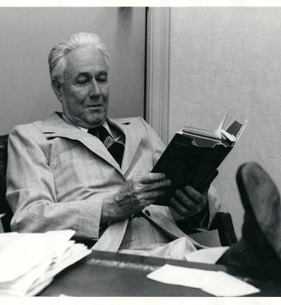
My friend, Bobby Howe, practiced law with his father and older brother on King Street before he became the Plea King of the Charleston County criminal courts. He was still earning his reputation for pulling the impossible out of his hat when the son of a family he represented found himself facing up to five years for Possession with Intent to Distribute about a half pound of marijuana. A customer of the son snitched giving the police probable cause to obtain a search warrant for the familial home. While the mother stalled as long as she could at the front door, her son tossed the pot out the second story window into the waiting hands of a narc who’d gone around to the back of the house. Things were looking downright dim for Bobby’s client and got worse when his guilty plea was scheduled to be called before the Honorable Clarence E. Singletary known for taking a hard stance against drugs.
Sensing his client was facing hard time, Bobby in desperation turned to his father, Gedney M. Howe, Jr., for help. “Pops, I need your help,” Bobby pleaded. “This family has been good, repeat customers of mine for the past couple of years. One member or another is always in some kind of trouble with the police, and they always pay their fees,” Bobby explained. “What’s the case about?” Big G asked. “Just some pot, nothing serious,” Bobby sheepishly said. “Well, just how much pot are we talking about?” “Half a pound,” Bobby replied as Big G’s eyebrows raised knowing that much pot was enough to put you in the slammer in those days. Bobby knew it too but put on his best puppy face to tug his father’s heart strings and said, “Pops, he’s scheduled to plea today before Judge Clarence Singletary and, knowing how close you are to Judge Singletary, you both being boat captains during the war, I was hoping you’d come stand with me to help keep the sentence down as low as possible.” Big G served in the Navy as a PT boat captain during the war and Judge Singletary served in the Coast Guard as a Commander but, Bobby was right, they were good friends. Big G agreed to attend the plea hearing, but Bobby should have known there was no way he would just stand in on a case.
Bobby hastily explained the facts of the case to his father as they walked to the courthouse to meet Bobby’s client and his family. Bobby’s father served as the Solicitor or prosecutor for Charleston County and the family whose livelihood stretched back to the bootlegging days knew exactly who Bobby’s father was and very much appreciated his help.
Big G created quite a stir as he entered the courtroom. Big G was tall and thin and cut the striking figure of a Southern gentleman with his silver hair. Judge Singleton acknowledged his presence and asked what he could do for Big G at the first break. Big G off handedly said he was just there for a little drug case scheduled for that afternoon and Judge Singleton asked that the case be called next as an accommodation for his old friend. Robert B. Wallace was the Solicitor and was glad to oblige.
As is customary, Judge Singletary asked the preliminary questions. What is your full name? How old are you? How far did you go in school? Can you read and write English? Are you presently under the influence of alcohol, drugs, or medication that might affect your ability to understand these proceedings? Have you had sufficient time to discuss your case with your attorney? Are you satisfied with his attorney’s representation? Do you understand the charge against you? Has your attorney explained the elements of the offense? Do you understand I can give you up to five years? Do you understand that you have the right to plead not guilty? Do you understand that you have the right to a trial by jury? Do you understand that you are presumed innocent unless the State proves your guilt beyond a reasonable doubt? Do you understand that the State would have to prove every element of the offense beyond a reasonable doubt? Do you understand that you have the right to confront and cross-examine the witnesses against you? Do you understand that you have the right to subpoena witnesses and present evidence in your defense? Do you understand that you have the right to testify or remain silent? Do you understand that by pleading guilty, you are giving up these constitutional rights? Has anyone threatened you or forced you to plead guilty? Has anyone promised you anything in exchange for your guilty plea other than the agreement stated here in court? Are you pleading guilty of your own free will? Are you pleading guilty because you are, in fact, guilty of the offense charged? Bobby’s client answered affirmatively and Judge Singletary turned to Solicitor Wallace for the factual basis supporting the plea.
Solicitor Wallace recited the facts of the case and advised chemical testing confirmed the contraband was marijuana weighing just shy of half a pound. Satisfied, Judge Singletary asked Bobby’s client if he heard the facts presented by the solicitor? Are those facts substantially correct? Do you still wish to plead guilty? Do you understand that once I accept your plea, there will be no jury trial? Bobby’s client again answered affirmatively and Judge Singletary concluded by asking, How do you wish to plead—guilty or not guilty? Bobby’s client pled guilty and Judge Singletary turned to Bobby for anything he wished to say on behalf of his client, but Big G stepped right in.
Big G put his arm around Bobby’s client’s mother’s shoulders and began by saying, “Judge, when other boys their age were out in the streets protesting the war in Vietnam, these are the kind of boys who volunteered to serve out nation. This is the kind of mother who read those lonely letters from her sons overseas. I know how your honor feels about how drugs are tearing apart the fabric of our great nation, but all I ask is that you have mercy on this poor mother in passing your sentence.” Judge Singletary was moved but gave Bobby’s client what we lawyers call a bullet, four years suspended on service of twelve months followed by two years’ probation.
The client’s family were very happy with the sentence. They knew, because of the way the system works, it was very unlikely Bobby’s client would ever see the inside of the Big House. More, likely he’d serve a couple of months in the County jail before being released. They thanked Big G profusely as they walked out of the courthouse. Then the client’s mother blurted out, “Mr. Howe, that was a wonderful speech you made for my boy but none of my boys served in Vietnam.” Big G just smiled and said, “I never said they did. I said they were the kind of boys that served.”
-
A BRUSH WITH A POTENTIAL SERIAL KILLER

Assistant Solicitor Mary Katherine Schmutz
I was never a prosecutor, but I have a lot of respect for what they do. Quite a few became my friends although we we adversaries in the courtroom. I once helped Assistant Solicitor Kate Schmutz, a seasoned prosecutor, convict a real creep who showed every sign he was well on his way to becoming a serial killer.
My partner, David Pearlman, represented the husband of a young woman who was severely beaten during the armed robbery of the convenience store where she worked. Beaten so severely she had to have a craniotomy to relieve cerebral swelling for a subdural hematoma. Her neurosurgeons kept her in an induced coma and ventilated during her post-op recovery. David was representing her husband to recover workers’ compensation benefits for the woman and her family.
One night a third-year medial student, doing a clinical rotation at the hospital, observed a male nurse coming out from behind our unconscious woman’s hospital bed appearing to be pulling up his scrubs. The student reported the incident and the police were called. The nurse denied any wrongdoing and the immediate investigation revealed no obvious signs of a sexual or physical assault of any kind. A Sexual Assault Forensic Exam (SAFE) was performed but it also proved negative for physical evidence. Still, the nurse didn’t have any plausible reason for being in the unconscious woman’s room and his denial anything happened was directly contradicted by the medical student. I don’t know what they were hoping to find, but the detective obtained a search warrant to search the nurse’s house and what he found sent chills up everybody’s spines.
The nurse had built himself a little operating room in his back room. Blacked out windows, a stainless steel tray of neatly arrayed surgical scapels, scissors, bone saws, spreaders, and clamps. Syringes and little vials of Propofol, Versed, Ativan, Xanax, Valium, Rocuronium, Succinylcholine, Phenylephrine, and Ephedrine all neatly arranged on a sideboard nearby. Most disturbing of all were his handwritten notebooks found in his bedroom filled with stories of unconscious woman being operated on, sexually assaulted, and killed. The nurse’s explanation he was doing research to write a book about a doctor who was a serial killer placated exactly no one.
The problem from a legal standpoint was no one actually saw the nurse so much touching the unconscious woman, never mind sexually assaulting her. The student only said he saw what appeared to be the nurse pulling up his scrubs, although he was pretty adamant that’s what he saw. Forensic testing was all negative and, of all the drugs found in his little operating room, only Versed, Valium, and Xanax were scheduled drugs and they were only Schedule IV drugs the possession of which was a misdemeanor that carried only six months, a $1,000.00 fine, or both. If a judge maxed the nurse out the maximum penalty he was facing was only eighteen months, eligible for parole after serving only four and a half months. The nurse’s criminal defense attorney was pushing hard for a plea bargain for probation and the unconscious woman’s husband felt like the whole incident was being swept under the rug. My partner, David, was unfamiliar with the ins and outs of criminal Law and asked me to look into the case.
Kate was frustrated because it was looking like the creep would slip away and afraid he’d do it again for real if given half a chance. She was glad for any help I could offer and let me review the case file. As a lawyer, I saw the same problems Kate saw but I knew a forensic toxicologist we could turn to for help. Roger earned his Ph.D. in Biochemistry and Molecular Biology at Yale before attending the Medical University of South Carolina to become an M.D. You can take my word for him being way out smart, eccentric, and not the easiest medical expert I ever worked with, but he was one of the best.
Roger and his wife were home schooling six or seven children which meant Roger much preferred for me to take him to the Blind Tiger Pub for a cold draft or two or three while we discussed cases rather than going home. I’ll bet Roger was every bit a stickler and demanding with those kids at home as he was working with us lawyers, but, after we’d done everything Roger asked, he’d give us rock-solid expert testimony supporting causation to the exclusion of all other possible causes. He helped David win what I believe was the first dirty plant case winning compensation for the myriad of afflictions suffered by Lockheed employees exposed to toxic substances building helicopters for the Vietnam War in the 1960’s and ‘70’s. He helped David and me prove causation when a medical device tester contracted aplastic anemia and myelodysplasia from exposure to contaminated blood products. I discussed our unconscious woman’s case with Roger during a visit to the Tiger and piqued his interest. After grilling me for more specifics, he saw something both Kate and I had missed.
It wasn’t that any one of the drugs found in the nurse’s little operating room were particularly bad, it was their combination that gave strong circumstantial evidence the nurse had a fantasy kink about performing operations on conscious but paralyzed woman. The Propofol, Versed, Ativan, and Xanax would sedate a person but not necessarily render them unconscious. The Rocuronium and Succinylcholine would paralyze them while the Phenylephrine and Ephedrine would keep them alive during any surgical procedure. According to Dr. Russell, the only purpose such a combination of drugs the nurse had would have been to perform surgical procedures on a conscious but paralyzed person. It didn’t prove the nurse had sexually assaulted our client but it was enough that a seasoned prosecutor like Kate Schmutz could reject any misdemeanor plea and force the nurse to plead to Criminal Sexual Conduct in the Third Degree for actual jail time, the loss of his nursing license, and registry as a sex offender.
My limited foray into the field of criminal prosecution proved very satisfying. My small role was to connect Dr. Russell and Kate Schmutz to help make sure a wannabe serial killer was exposed, prosecuted, and prevented from ever realizing his sick fantasies. Dr. Russell never sought to be paid and felt the nurse’s punishment was more than sufficient payment for his expertise. Kate Schmutz deserves the lion’s share of the credit, not just for the result in this case, but for dedicating her career to prosecuting serious sex offenses making us all safer in the process.
-
TURNING CHICKEN SHIT INTO CHICKEN SALAD
One of the best civil defense lawyers I ever tried a case against was Senator Heyward E McDonald. Senator McDonald was discharged from the U.S. Navy after having contracted polio serving in the Korean War. He was awarded a 100% disabled because the disease deprived him of the full use of his legs but learned to walk again using leg braces and crutches and decided to become a lawyer graduating magna cum laude from the University of South Carolina School of Law in 1958. Want to know how good a lawyer he was? Try trying a soft tissue injury wreck case against a older lawyer wobbling around the courtroom on rickety old braces wondering aloud how a stiff neck entitled anyone to monetary damages and see how that turns out for you. He cut my ass more times than I care to remember.
Still, I have to admit outside the courtroom, Senator McDonald was always nice to me. I once ran into him wearing his everyday braces at a Senate reception I attended with my boss, Senator Isadore E. Lourie. He was standing upright and walking around without even the hint of limp. At the reception, he complimented me on a case I’d recently won against him by saying I’d turned chicken shit into chicken salad. I told him I was taught by the Master Salad Maker himself, Jack Swerling.
He asked for the story, so I told him. It was one of the first times I got to watch Jack in action trying a DUI, driving under the influence, case in the Columbia Municipal Court. In those days the breathalyzer machine had an inked needle that rose on a numbered meter after the test was administered. When the test registered its highest number, the officer would press the needle down to mark the result on a green piece of paper that looked like, well, a old analog speedometer on a car. The officer’s reluctance to admit the obvious odometer appearance of the test result on cross examination left cracks in his credibility and Jack moved in for the kill. So, you testified you have to observe the driver for twenty minutes before administering the test? Yes, we examine their mouths, remove any dentures, and observe them for twenty minutes to allow time for any alcohol in the driver’s mouth to evaporate before administering the test. And, why do you do that? So the BA test measures the alcohol in the subject’s blood, not his mouth. And, that’s because the test is testing to see if the driver’s blood alcohol concentration is greater than one percent of one percent, is that right? Yes, one percent of one hundred percent alcohol in the drivers blood. So one percent of one percent, that’s one ten thousandth, do I have the math right? So, let me ask you this, officer, what if the driver just finished eating a chicken salad sandwich and has a big chunk of chicken salad stuck between his teeth soaking up alcohol, how does that effect the BA test result? The officer, not wanting to say he didn’t know, blurted out his trained response, I’m not trained to know how the test works, only how to perform the test. In that moment, I watched Jack Swerling turn courtroom chicken shit into chicken salad and win the case.
It is a vital advocacy skill trial lawyers have to learn. It goes by many names: throwing mud against the wall to see if any sticks, firing every argument hoping one hits the mark, casting about fishing for an argument, or throwing out the kitchen sink looking for any theory that might gain traction. Senator McDonald knew exactly what I was talking about and got a good laugh out of my story. I thanked him for his compliment and told him, any skill I have turning chicken shit into chicken salad is because I was taught by great trial lawyers like himself and Jack Swerling.
-
THE CASE OF THE DEBOSHED FISH
“Why, thou deboshed fish, thou!”
The Tempest, Act 3, Scene 2
William Shakespeare
Like those who glorify military service and war, many people mistakenly believe courtroom battles are all fought above board by honorable lawyers when, in reality, they can often be down and dirty fights between legal Goliaths. I think I still suffer post-traumatic stress disorder from my service as a foot soldier in the Swerling & Harpootlian v. the Honorable Lawrence E. Richter War of the mid-1980’s.
I was drafted late into the war the origins of which remain shrouded in mystery to me but, as I recall, it all started with a Swerling & Harpootlian trial presided over by Judge Richter in Columbia. Apparently, Judge Richter flexed his judicial muscles causing Swerling and Harpootlian to have hurt feelings. They launched the first salvo of the war when a decision by Judge Richter was affirmed by the South Carolina Court of Appeals.
The case on appeal involved the $5,140.00 prize awarded for the largest fish caught during the James Island Yacht Club King Mackerel Fishing Tournament. Ice was discovered in the gullet of the 29-pound Mackertel, the largest by a substantial margin, was disqualified. When the fisherman who caught the frozen fish sued to collect the reward, Judge Ricther flexed his judicial muscles again and tossed the case out of court.
For some inexplicable reason, the Honorable Randall Bell began his appellate court decision addressing the case by quoting the Bard’s dialogue by Trinculo defending his drunk friend Stephano by calling Caliban a “deboshed” fish. A more complete quote of the dialogue is, “Thou liest, most ignorant monster. I am in case to justle a constable. Why, thou deboshed fish, thou, was there ever man a coward that hath drunk so much sack as I today? Wilt thou tell a monstrous lie, being but half a fish and half a monster?” Who knows, perhaps Swerling & Harpootlian’s case before Judge Richter involved to jostling a constable, whatever that means, but it was enough for open hostilities to break out. Swerling and Harpootlian decided to send a copy of Judge Bell’s decision stuffed into the mouth of a fresh caught Mackerel to Judge Richter’s chambers in Charleston.
Oh, the gauntlet was thrown and the battle lines were drawn. This time it was Richter who retaliated. He struck a blow below the belt and had printed flyers distributed to all the winos in Columbia inviting then to enjoy free food and beverages at the Swerling & Harpootlian lavish annual Christmas party. Touche!
It was then that I was drafted into service. I was instructed to have $500.00 of food from a client’s Chinese restaurant delivered to Judge Richter’s chambers at the old Charleston County Courthouse. The old courthouse at the Four Corners of Law was built sometime back in the 1700’s and provided cramped quarters. I didn’t know, as I’m sure you don’t either, how much $500.00 worth of Chinese food could stink up a courthouse. I don’t think Judge Richter ever completely got the smell out of his chambers.
I am thankful Judge Richter never learned I was the Swerling & Harpootlian operative who delivered the coup de grace that ended the war. To my knowledge, Jack Swerling, Dick Harpootlian, and Larry Richter reconciled and remained good friends thereafter, but what of us foot soldiers who carry the emotional scars of their war? No medals, parades, or reparations were offered by either side. We few, we happy few, we band of brothers, who stood together in the fight, shall never hold our manhood’s cheap and will have to console ourselves with the knowledge the practice of law doesn’t have to be stodgy and can sometimes be fun and lighthearted.
-
WHO’S THE MOVING PARTY?

Judge Martha E. Hass
Folly Beach Municipal Court
Being as old as I’m getting to be, I sometimes wonder if I get the facts of the stories I write about jumbled up and confused. I’ll be sitting at my desk and a case I tried forty-five years ago will pop into my head and I’ll decide I want to write about it. Like a case I tried in the Folly Beach Municipal Court in 1980 when I represented a schoolteacher arrested and charged with disorderly conduct for performing oral sex on the beach on Folly Beach. She was mortified she would lose her teaching certificate but, to be honest, I wasn’t sure what, if anything, I could do for her.
Folly Beach is affectionately known as the Edge of America and has always enjoyed let’s just say a colorful reputation. It sat along the main sea route leading to Charleston Harbor and the many shipwrecks along its shore first earned it the name Coffin Island before developers, wanting to turn it into a resort destination, changed its name to Folly Beach. “Folly” because its an old English word for lush greenery, but it could just as aptly meant the more modern connotation of a foolish act that leads to a bad outcome as in my schoolteacher’s case.
Trials on Folly Beach were held in the evenings after the part-time municipal judge, Martha E. Hass, finished her day job as a College of Charleston Business Law professor. She was a good bit older than me but had graduated USC law school the year after I became a lawyer. It was my first time appearing before her and she struck me as a hardnosed, no-nonsense kind of judge. The schoolteacher and I sat in the makeshift courtroom waiting our turn watching Judge Hass mete out tough justice to all manner of assorted characters accused of committing one bizarre disorderly act after another on the island. My poor schoolteacher became more and more nervous with each guilty verdict and sentence.
We were thankful when it turned out we were the last case on the docket that night. By the time we were called, the courtroom had almost emptied out much to my client’s relief. Folly Beach didn’t have a police department, it had a Department of Public Safety, and our case was being prosecuted by the Fire Chief Wallace Benson, who had apprehended my client in the act. It was obvious he thought what my client had been caught doing was funny, but you could also tell Judge Hass didn’t think it was funny in the slightest. I misread her anger completely thinking she was going to come down on my client like a ton of bricks but, halfway through the Chief’s presentation of the evidence against my client, Judge Hass interrupted him to ask where the gentleman was my client allegedly committed the disorderly conduct with. The Chief was surprised by her question and stammered he didn’t know. Judge Hass announced, “Case dismissed for failure to prove who the moving party was.” The finality of her decision was emphasized by the banging of her gavel on her bench.
It was as if the weight of the world had been lifted off my client’s shoulders and she started crying. I walked her out to her car and stood there watching as she pulled away. When I turned around, there was Judge Hass. She asked if I’d like to get a bite to eat with her at one of the many fine seafood restaurants on the strip. I did and we shared a wonderful meal, a couple of drinks, and a great conversation together that night. What a delightful person she turned out to be, smart as a whip and funny too. She told me stories about growing up in Charleston and her love of boating and fishing the beautiful rivers and estuaries that surround us.
I never appeared before Judge Hass again but never forgot her either. Here it is almost 50 years later and I still remember that trial like it was yesterday, or think I do anyway. To be sure, I looked her up online wanting to find a picture of her to go with my story. Of course, she’d aged as I have but I still recognized her. I also wanted to make sure I’d gotten the spelling of her name and the facts straight for my story so I pulled up her Post & Courier 2023 obituary and was relieved to confirm I still got it. Right there in her obituary in black and white it says, “She earned M.A.T, M.B.A., and Juris Doctor degrees from the University of South Carolina. She was a complex person with great Ability and talent. She grew up and worked in a man’s world and was not afraid to speak her mind. Early in her career she practiced Family Law and served as a Folly Beach Magistrate. She was especially proud of the fact that the police learned quickly not to bring cases against prostitutes unless they also brought in the johns…” I wonder if she was referring to my case.
-
NO PERSON IS ABOVE THE LAW
The Rule of Law embraces three related principles: no man is above the law, government officials possess only the powers the law gives them, and, when they exceed those powers, an independent judiciary must be available to curtail their abuses. These principles were established a hundred and forty-four years ago in the case of United States v. Lee, 106 U.S. 196 (1882). Mary Lee, inherited Arlington House and 1,100 acres in Virginia across the Potomac River from Washinton, D.C. from her great-grandmother, Martha Washington. She lived on the property with her husband, General Robert E. Lee, until the Civil War during which Congress passed a special tax on Confederate property. The tax due on Arlington House was just $92.07 but the tax commissioners refused to accept payment from Mrs. Lee’s agent and demanded the tax be paid in person. The Federal government seized the property for unpaid taxes and began building the Arlington National Cemetery. After the war, the Lees’ son claimed the tax sale was illegal and sued to evict the Federal agents occupying the land. Justice Samuel Freeman Miller wrote for the Supreme Court, “no man in this country is so high that he is above the law” and “all the officers of the government, from the highest to the lowest, are creatures of the law and are bound to obey it.” Lee won the case and the Government was forced to purchase the land from him at fair market value.
The Rule of Law is currently being tested in the case of Trump v. Internal Revenue Service, No. 1:26-cv-20609 (S.D. Fla. 2026). Littlejohn, an employee of an IRS subcontractor, was indicted for the unlawful disclosure of President Trump’s and other wealthy people’s tax returns in violation of 26 U.S.C.
7213(a)(1). Littlejohn pled guilty and was sentenced to sixty months in prison. Several other people whose returns had been disclosed timely filed lawsuits within the two years allowed under 26 U.S.C.
7431(d) and the DOJ zealously defended those actions.
Two years and three months later, President Trump, his sons, and businesses filed a lawsuit seeking $10 Billion dollars in reputational and business damages. DOJ never filed an answer to the complaint and no discovery was conducted. The Court was concerned about the suit being collusive and ordered the parties to file briefs addressing whether the case presented a “case and controversy” required for Federal Court jurisdiction under U.S Const. Art. III, cl. 1. Neither party filed a brief but, instead, on May 18, 2026, not four months after the case was filed, Plaintiffs filed a Notice of Voluntary Dismissal. Two days later the DOJ published a “settlement agreement” providing for the creation of a $1.776 Billion Dollar “anti-weaponization fund” to be financed with taxpayer dollars. The settlement agreement was signed by White House counsel who was neither listed as an attorney of record nor admitted to practice law in Florida. The DOJ also issued a “Release Order” signed only by Acting Attorney General Todd Blanche releasing the President, his family, businesses, and affiliates from “any and all claims, counterclaims, and causes of action … that have or could have been asserted” by the IRS.
A motion was filed to set the settlement aside as a “fraud on the Court.” Plaintiffs protested the court lacked jurisdiction to hear the motion since the underlying “ordinary” case had been settled and dismissed by the parties. The Court disagreed and stated, “The issue before the Court is whether … [the parties] ignored ethical norms, court rules, and legal authority to manipulate the judicial process. The issue is whether they did so to gild their efforts to gain unprecedented access to public funds with the patina of legitimacy. There is nothing ‘ordinary’ about this case…”
The Court went on to rule it had jurisdiction to consider collateral issues under both Rule 11 and the Court’s inherent powers to assure “the integrity of the Court’s jurisdiction and process” and ruled the case violated the case and controversy clause of Article III. “A justiciable controversy must be definite and concrete, touching the legal relations of parties having adverse legal interests.” Aetna Life Ins. Co. v. Haworth, 300 U.S. 227 (1937). “There is no Art. III case or controversy when the parties desire precisely the same result.” GTE Sylvania, Inc. v. Consumers Union of the United States, Inc., 445 U.S. 375, 383 (1980).
The Court specifically found, “… Plaintiffs improperly employed this lawsuit to justify a particular award in this matter – access to taxpayer funds and exemption from audits and other investigations…” The extraordinary $1.776 Billion dollar award “fashioned by the parties for claims that were never litigated, and have yet to be defined, on behalf of unidentified third parties whose future remedies bear no relationship to the claims in this case, indicates that real adverse interests were never before the Court.” Considering the exceedingly brief four-month history of the case, the almost total absence of any docket entries indicating any adversarial actions had been taken, and the Defendant’s deviation from basic litigation strategies pursued in similar cases, the Court concluded, “… Defendants actions (or inactions) as directed by DOJ, and the subsequent ‘resolution’ of this lawsuit leads the Court to conclude the Parties interests were one and the same.” “This action was never about a party seeking judicial resolution of a legal issue or factual dispute. The nature of the suit itself and the conduct of the Parties and counsel from its filing make plain that this was an attempt to use the Court to provide some legitimacy to an agreement to confer immunity to people and entities affiliated with the President and to earmark billions of dollars from American taxpayers to redress grievances not defined in the lawsuit.”
Undoubtedly, Plaintiffs will appeal the District Court’s decision, and we have not heard the last of this latest attack on the Rule of Law. South Carolina Lawyers for the Rule of Law publish this article in the belief that the greatest protection against tyranny is an active, informed citizenry backed by a system of shared power, the rule of law, and strong democratic institutions. When people know the facts, participate in governance, and refuse to let unjust or illegal orders go unchallenged, tryany has no place to take root.
-
My 1L Summer Law Clerk Job
NRA Members for a Better NRA
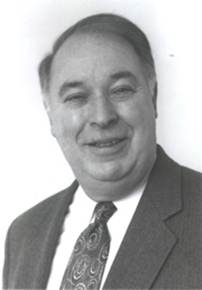
Charles J. Irwin
Fitzgerald v. National Rifle Association, 383 F. Supp. 162 (D.N.J. 1974)
Far as I know, nobody in my family was ever a lawyer before me. My father owned a trucking company and I thought his friend and lawyer, Charles J. Irwin, was about the coolest guy I’d ever met. Not at first because of his legal skills but because he drove a light metallic blue, convertible Jaguar XKE. He was the New Jersey State Senator for Union County who lived in a beautiful home in Mountainside, New Jersey where my father would sometimes take me to visit. I remember he had a trophy case full of memorabilia from when he and his beautiful wife, Dianna, were the National roller skate dancing champions. He was the first person to take notice of my desire to become a lawyer and invited me to attend an actual trial with him when I was still in high school. I still remember him turning to me with a smile and saying, “watch me pluck the feathers out of this turkey’s ass,” before doing just that to a witness on cross examination in the trial. He offered me a summer law clerk job after my first year of law school.
Problem was I was a student at Rutgers School of Law in Camden, New Jersey, across the river from Philadelphia, and his office law firm was located in Newark, across the river from New York City. Of course, I took the job and that meant I had to drive forty-five minutes each to the train station in Trenton, then ride the NJ Transit train another forty-five minutes to downtown Newark, and then walk the four or five blocks to his office . The experience was worth every minute of the commute to and from his office that summer each morning. Only to do it in reverse vat the end of every day. The experience working for Mr. Irvin that summer was worth every minute of the commute.
I was one of six law clerks that summer. Charlie, as we were instructed to call him, graduated from Harvard Law School and founded the very successful law firm of Irwin and Post. One of his memorable clients was Val Forgett, Jr., who made a fortune circumventing strict gun control laws by manufacturing replica muzzle loaded, black powder firearms. Mr. Forgett’s friend, Thomas Fitzgerald, didn’t think the NRA was conservative enough and wanted to run for office on the NRA Board. He tried to place an ad in The American Rifleman magazine supporting his candidacy, but the NRA rejected his ad. Charlie was hired to sue the NRA and assigned us as law clerks to work on the case.
As a 1L student I was one of the youngest and least experienced law clerks, so I was assigned to research the ways the NRA operated as a quasi governmental agent. I was surprised how much the State and Federal governments had ceded authority for the regulation of gun training and licensing to the NRA but ultimately that issue turned out to have no effect on the court’s favorable ruling. What I enjoyed most about the clerkship was the lunch sessions presided over by Mr. Irvin. He would order in lunch for everybody and we would all eat sitting around the large table in his conference room. Charlie would go around the table asking each law clerk for a summary of what they had done that morning. Then we’d all discuss whatever topic an individual law clerk was working on and Charlie would give insights on how best to proceed. The discussions were always interesting and animated. Almost every Friday, Mr. Irvin would distribute a new draft of our brief with editorial comments on where more work needed to be done. I was amazed how the brief came together as a group effort all of us were proud to have contributed to.
People generally, but law students too, think courtroom victories are attributable to brilliant lawyers, but, in reality, they are more often the result of the cooperative efforts of many lawyers working together. By the end of the summer and my clerkship that summer the brief was finished. I followed the case and Mr. Irwin’s career closely. He won the case on September 23, 1974 after I’d begun my second year of law school. The issue the Court relied on in granting relief was the NRA Board’s breach of the fiduciary duty to conduct fair and open corporate elections. The American Rifleman was forced to run the ad but Mr. Fitzgerald lost the election. Val Forgett graduated to manufacturing military jets for sale on the international arms market. Mr. Irvin was first appointed by the Governor as the first Director of the New Jersey Department of Consumer Affairs and later as the first Chairman of the Casino Development Authority when gambling was legalized in Atlantic City. Later he went on to represent sovereign Native American tribes to establish their own casinos across the nation. He was wearing western garb looking more and more like Gary Spence, the Wyoming lawyer, in the last picture I saw of him before he passed away in 2005.
I am sure my MAGA family and friends will be surprised to learn I began my career by helping sue the NRA for not being conservative enough. I didn’t go on become a Second Amendment lawyer but what I learned that summer working for Mr. Irvin was the importance of collaboration between lawyers in the real-life practice of law. No lawyer knows all the answers, can do it all themselves. Sadly today client’s cases are too often treated like commodities, traded by lawyers to other lawyers for a share of the fees generated without any thought of working together on the case. The cases suffer and the lawyers never learn to become better lawyers. I admire Charles J. Irwin today for so much more than his XKE but most of all for him teaching me working collaboratively with other lawyers can help you win impossible cases against seemingly invincible opponents.
-
MY FIRST FEDERAL COURT CRIMINAL TRIAL
When we were kids fussin’ over something silly, somebody would always say, “Well, don’t make a federal case out of it!” Then, in what seemed like the blink of an eye, I found myself handling my first Federal Court criminal case. And what heinous crime was it that required prosecution in the Federal Court? Well, it seems the City of Columbia had been forced to expend a considerable sum of money unclogging a storm drain clogged with what must have been five or six years of unsolicited bulk mail advertisements. Bulk mail advertisements an older, long-term mailman had tossed down the storm drain to keep from having to carry in his shoulder bag in the Carolina heat. They made a Federal case out of it alleging his actions violated Title 18 of the United States Code, Section 1703(a), which makes it a crime for a Postal Service employee to unlawfully “secrete, destroy, detain, delay, or open” mail entrusted for delivery in violation of the Postal Regulations. An offense that carried a maximum penalty of five years in prison.
Not only had the defendant postman been charged criminally, but he’d been fired from his job of almost thirty years. Being out of work, he didn’t have enough money to hire any of the more experienced criminal defense lawyers in the firm, so, he hired me even though I’d never stepped foot in a federal courtroom. Fortunately for him, what I lacked in experience, I made up for with incredibly good luck.
First of all, James Bell, a lawyer for the Postal Workers union was representing the postman on a grievance relating to his termination and he was willing to help me out with the trial. I was encouraged to learn Jim also represented the Hell’s Angels and knew his way around the Federal courtroom but that was just the beginning of my good fortune. We drew the Honorable Robert W. Hemphill as our United States District Court Judge as our trial judge and Jim had been Judge Hemphill’s law clerk when he first graduated law school.
Jim filed a motion requesting that Judge Hemphill issue an Order staying the grievance until after the criminal trial to preserve the postman’s Fifth Amendment right against self-incrimination but Judge Hemphill gruffly denied the motion in about five seconds. This shook my confidence in Jim’s prior association with the judge but Jim confidently reassured me everything would work out. What choice did I have but to believe him as the trial began. We sat patiently at the defense table as the prosecutor stood up to address the jury.
The prosecutor began by telling the jury he was not a Department of Justice attorney but had flown down to Columbia all the way from Washington, D.C., and that he proudly represented the United States Postal Service, not the United States of America. Jim tapped me on my shoulder and whispered, “See, I told you everything would turn out.” Judge Hemphill stiffened in his high-back chair behind his elevated desk, his complexion darkened, and he interrupted the prosecutor in the middle of his opening argument, “You aren’t suggesting to the jury the Post Office isn’t part of the United States government, are you?” The overconfident prosecutor stammered, “No. No, sir.” “That’s good because as I recall the Postal Service is authorized by Article I, § 8, cl. 7 of the United States Constitution.” I don’t know what else the prosecutor had written down for his opening statement, but it was obvious it would continue along the same lines. The polished prosecutor began to look every bit as inexperienced as I was struggling to wing it with a new opening statement on the fly. It was Jim who suggested I reserve my opening statement until after the Post Office presented their case, a move I wholeheartedly supported not wanting to make a fool of myself in front of the jury and Judge Hemphill like the prosecutor had just done.
The prosecutor seemed to recover as he began presenting his evidence consisting of testimony and photographs of the sewer drain being unclogged of sopping wet flyers and advertisements and by the testimony and introduction of the postman’s signed confession. Things weren’t looking good for the postman. Looking back on it, I don’t think there was much any lawyer could have done on cross examination, but back then my anxiety grew that my inexperience caused me to miss some opportunity to blunt the evidence against my hapless client. Before I knew it the prosecutor rested his case, and the time had come when I was going to actually have to do something. My heart was racing a mile a minute but, before I could stand up to say anything, Judge Hemphill chimed in asking, “Mr. Prosecutor, the offense charged is failing to deliver the mail in violation of the Postal Regulations. I don’t recall you having entered the particular regulation he is accused of violating into the record.” The prosecutor froze like a deer in headlights before he frantically began searching through the files on his desk for the regulation . Visibly frustrated, he sheepishly asked the judge for 15 minutes to run to the courthouse library to locate the regulation in the Code of Federal Regulations. Judge Hemphill granted his request and said court would be in recess for fifteen minutes as the flustered prosecutor fled the courtroom.
You’d think the prosecutor, being an attorney employed by the Postal Service, would know the Code of Federal Regulations is so voluminous it takes up two or three rows of shelves in the library and would have asked for more time. Just finding the seven or eight volumes of regulations related to the Postal Service somewhere in the middle row already took more than the fifteen minutes granted. Being unable to find the regulation he was looking for in those volumes within another fifteen minutes, the prosecutor gave up and returned to the courtroom empty-handed to avoid further antagonizing Judge Hemphill. When he admitted he was unable to produce a copy of the regulation, Judge Hemphill granted a directed verdict of not guilty and, amazingly, I had won my first Federal Court criminal trial without having to say or do much of anything.
Because the criminal case fell apart, so did the grievance and the postman was not only reinstated but given a desk job to finish out his years before retirement . I couldn’t say I gained much in the way of experience from the trial, but I could say I was undefeated as a Federal Court criminal defense attorney. Oh sure, luck played an enormous role in my victory, but, as I think back on the trial all these years later, I still feel justice was done. I had something every bit as valuable as good facts and favorable law, I had a deserving client. My postman had faithfully delivered the mail through the rain and heat for almost thirty years until his arthritic knees were giving out. What he’d done was wrong, but not five years in prison wrong. He saved his customers the burden of having to throw the junk mail out themselves. The case taught me, as long as you have a deserving client, you always have a chance in a trial. Well, a deserving client, luck, and a Judge like the Honorable Robert W. Hemphill.
-
WELL, RECUSE YOU …

E. Hood Temple
Ledford v. Dep’t of Public Safety and State Fund, 428 S.C. 399, 832 S.E.2d 571 (2019).
I can guarantee sooner or later in your career as a lawyer you will be bullied by a judge. There is an old saying that was attributed to Ralph Waldo Emerson by the jurist Oliver Wendell Holmes, Jr., “when you strike at a king you must kill him.” It is hardly surprising this saying caught Justice Holmes’ attention as it certainly applies when a lawyer moves to recuse a judge. How you respond when you are bullied will help define you as a lawyer. A lawyer I represented, E. Hood Temple, refused to sacrifice his client to avoid the personal risk and cost of upholding his attorney’s oath and, by doing so, defined himself as one of the finest lawyers I have ever known.
Allow me to begin Hood’s story at what would normally be the end. Seven years after Hood’s client was bullied, denied compensation for the combined effects of two admitted, career ending work-related injuries, called a liar, and threatened with criminal prosecution by a Workers’ Compensation Commissioner unless he settled his claim on grossly unfavorable terms. Seven years after that same Commissioner also called Hood a liar for refusing to bend a knee and referred him for disciplinary action. Seven years of mounting legal fees and costs, acrimony with other commissioners, and anxiety about personal consequences before the South Carolina Supreme Court finally asked his opposing counsel, who was present when the bullying occurred, what had happened and, as a result of what she said, ruled:
We hold the Court of Appeals erred in finding Commissioner Barden was not required to recuse herself. There was evidence in the record – including Temple’s affidavit – to support Ledford’s contention that Commissioner Barden threatened criminal prosecution unless the case settled. Given the serious allegations lodged against Commissioner Barden, coupled with Commissioner Barden’s adamant denial of threatening Ledford with criminal prosecution unless he accepted the Fund’s settlement offer, we questioned Respondent’s Counsel, Sarah C. Sutusky, at oral argument. Ms. Sutusky was a party to the conference call that underlies the recusal motion, and she corroborated the contents of Temple’s affidavit.
How we got to this remarkable Supreme Court decision is an all too rare story of personal courage and professional integrity worth telling.
Hood was a successful trial attorney and a respected Pee Dee citizen long before his client was bullied by Commissioner Barden. He was a member of the South Carolina bar who served leadership roles in both the state and local bar associations. He received the South Carolina Association of Justice’s Public Citizen Award for his dedicated service to his community. Prior to this incident, he had never felt compelled to file a motion to recuse a judge or commissioner but, when confronted with the bullying of his client in this case, Hood didn’t hesitate to protect his client’s rights and his own integrity.
Both Hood and his client, Scott Ledford, were clients any lawyer would be proud to represent. Scott served as a South Carolina Highway Patrolman for seventeen years. He earned the rank of lance corporal and was a member of the prestigious ACE Team which provides motorcycle escorts for visiting dignitaries. He ran lawn care and fishing guide businesses to supplement his patrolman income. Hood represented Scott for two admitted work-related injuries. The first occurred when he suffered muscle contractions from being tasered in a training exercise so severe they caused compression fractures to four of his thoracic vertebrae. Scott’s claim for his taser injury was settled for a 25% scheduled loss to his back on what’s called a Form 16 preserving his right to seek an increase in the future if his condition worsened. Scott returned to full duty as a patrolman after the settlement and suffered his second accidental injury in a motorcycle wreck pursuing a motorist. Based on the combined effects of both injuries, the State Disability Board determined Scott was unable to return to active duty as a patrolman and granted him disability retirement. Hood was representing Scott to recover workers compensation benefits for the combined effects of his two admitted, career ending injuries when the bullying occurred.
Scott’s claim was initially heard before Commissioner Andrea Roche, who ruled Scott was entitled to ongoing medical treatment and compensation for his motorcycle accident. No appeal was taken from Commissioner Roche’s Order. A year and a half later, the State Fund alleged Scott had reached maximum medical improvement and filed an application to stop payment of his temporary total compensation and to determine permanency. The Fund’s claim was heard before Commissioner Susan Barden.
Those of us who practiced workers’ compensation law were all too familiar with Commissioner Barden’s conservative awards. She was well known for using dubious credibility findings to gut deserving claims for workers’ compensation benefits. Still, Hood didn’t move to recuse her on that ground and presented his evidence at the stop-pay hearing. A month after the hearing, Commissioner Barden called and requested a telephone conference with the attorneys. She began the conference by saying she didn’t believe anything Scott said at the hearing except for his name and age. She indicated she had conducted an investigation into his prior taser injury and accused Scott of lying about his condition following that injury. She commented, “while he may be a former member of the South Carolina Highway Patrol ACE Team, he was not a member of the Truth Team.” She accused him of lying about his earnings from his lawn and fishing guide businesses and called his CPA prepared tax returns “creative accounting.” Commissioner Barden mentioned that, although she had a legal duty to report Scott to the Attorney General to be prosecuted for insurance fraud and perjury, if he settled his claim for whatever “minimal offer” the Fund might make in light of her conference call, she wouldn’t have to make the referral.
Hood was so shocked he immediately dictated a memo of what had been said. He hired a lawyer and ethics professor to research the applicable law and advise him how best to proceed. He ordered a transcript of the hearing held before Commissioner Roche so he could compare Scott’s testimony between the two hearings. He discussed the potential consequences of filing a motion to recuse Commissioner Barden with Scott, who, to his credit, also stood firm. Hood filed his motion, together with a memorandum of law, his affidavit swearing as to what had happened during the conference, and an affidavit of Scott’s CPA attesting his tax returns had been prepared in accordance with accepted accounting practices. It should be noted, opposing counsel chose not to file any response to the motion, supporting memorandum, or affidavits. Still, Commissioner Barden denied the recusal motion without even bothering to hold a hearing and ruled:
“… [Hood] alleges that the undersigned must disqualify herself on the grounds that ‘she threatened criminal proceedings unless the case settles.’ This is a false statement of fact and a frivolous allegation. The undersigned made no such proclamation, either expressly or impliedly. Counsel for the claimant has made such statement with the knowledge that it is false, or at best, a reckless disregard for its truth or falsity. The undersigned will not consider a frivolous and materially false statement as reasonable grounds for disqualification.
Her denial of the motion to recuse was followed by her shockingly unfair Order accusing Scott of being a liar and a criminal, his lawyer of being a liar and unethical, his CPA either being a liar or incompetent, and all of his doctors of being dupes for believing Scott’s lies about his injuries. And, for his admitted, career ending injuries, she ordered that he repay the Fund $18,932.80 in temporary total benefits he’d been paid under Commissioner Roche’s unappealed Order. Adding insult to injury, she also referred Hood to the Office of Disciplinary Counsel for sanction or disbarment.
Commissioner Barden chose the wrong lawyer to falsely accuse of professional misconduct. If she thought accusing Hood of unethical conduct and referring him to the ODC would cause him to tuck tail and run, she was sorely mistaken. All it did was cause Hood to hire me as appellate counsel and we filed a request for Review of Commissioner Barden’s Order by an Appellate Panel of the Workers’ Compensation Commission. The Panel declined Hood’s invitation during oral argument to question opposing counsel as to the truth of what had happened during the conference call and took their fellow commissioner’s word nothing happened. The Panel affirmed her denial of the recusal motion and her credibility findings but reversed her grossly unfair denial of benefits. The Panel awarded Scott an additional 15% disability of his spine and reversed her finding the Fund was entitled to an overpayment. If the Panel thought their Order would placate Hood, they too were sorely mistaken. Hood and I filed an Appeal to the Court of Appeals. Unfortunately, the Court of Appeals ignored the fact opposing counsel had never disputed Hood’s recusal motion or affidavits and felt Commissioner Barden’s findings constituted “substantial evidence” constraining their ability to reverse the Panel’s decision. If the Court of Appeals thought their affirmation would dissuade Hood from pursuing the matter further, they too were sorely mistaken. Hood and I filed a Petition for a Writ of Certiorari to the South Carolina Supreme Court. All the while, Commissioner Barden’s disciplinary referral of Hood languished with the ODC being afraid to take sides.
I already told you at the beginning how this story ended by quoting from the Supreme Court’s decision. Lawyers are taught never to ask questions they don’t already know the answers to and I have been asked why Hood and I kept asking for opposing counsel to be questioned about what happened not knowing what her answer would be in advance. We asked because Hood knew the truth of what had happened and I knew no lawyer in his or her right mind would accuse a judge of such blatant misconduct in a hearing attended by opposing counsel, if it wasn’t true. We both knew opposing counsel had declined to refute what Hood alleged in his motion and affidavit when afforded the opportunity. And Hood knew Ms. Sutusky personally and refused to believe she would violate her attorney’s oath by testifying falsely. So called rules of examination and cross-examination of witnesses aren’t hard and fast and sometimes must give sway to special circumstances in the search for the truth. Thankfully, even though it took seven years, the Supreme Court finally asked opposing counsel what happened and, as stated in their decision, based on what she said the king, or should I say queen in this instance, was slain.
I guess that’s not quite the end of Hood’s story. On remand Hood was able to settle Scott’s claim on favorable terms, Barden’s complaint against him with the ODC was dismissed, and Commissioner Barden’s was allowed to retire as a Workers’ Compensation Commissioner saving countless other attorneys and claimants from her heavy-handed brand of justice. Like the Supreme Court, Hood and I commend Ms. Sutusky for her candor and professionalism, but to my way of thinking, the real hero is E. Hood Temple who refused to be bullied, refused to throw his client under the bus, and honored his attorney’s oath at great personal expense and risk. I take little credit for the ultimate victory in his case, but I will take credit if his story encourages other attorneys to stand firm and honor their oaths when they are confronted by a bully in a black robe in the course of their own practice.
TRIALSTORIES.BLOG


