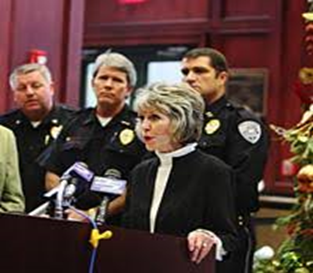
The Rule of Law embraces three related principles: no man is above the law, government officials possess only the powers the law gives them, and, when they exceed those powers, an independent judiciary must be available to curtail their abuses. These principles were established a hundred and forty-four years ago in the case of United States v. Lee, 106 U.S. 196 (1882). Mary Lee, inherited Arlington House and 1,100 acres in Virginia across the Potomac River from Washinton, D.C. from her great-grandmother, Martha Washington. She lived on the property with her husband, General Robert E. Lee, until the Civil War during which Congress passed a special tax on Confederate property. The tax due on Arlington House was just $92.07 but the tax commissioners refused to accept payment from Mrs. Lee’s agent and demanded the tax be paid in person. The Federal government seized the property for unpaid taxes and began building the Arlington National Cemetery. After the war, the Lees’ son claimed the tax sale was illegal and sued to evict the Federal agents occupying the land. Justice Samuel Freeman Miller wrote for the Supreme Court, “no man in this country is so high that he is above the law” and “all the officers of the government, from the highest to the lowest, are creatures of the law and are bound to obey it.” Lee won the case and the Government was forced to purchase the land from him at fair market value.
The Rule of Law is currently being tested in the case of Trump v. Internal Revenue Service, No. 1:26-cv-20609 (S.D. Fla. 2026). Littlejohn, an employee of an IRS subcontractor, was indicted for the unlawful disclosure of President Trump’s and other wealthy people’s tax returns in violation of 26 U.S.C. 7213(a)(1). Littlejohn pled guilty and was sentenced to sixty months in prison. Several other people whose returns had been disclosed timely filed lawsuits within the two years allowed under 26 U.S.C. 7431(d) and the DOJ zealously defended those actions.
Two years and three months later, President Trump, his sons, and businesses filed a lawsuit seeking $10 Billion dollars in reputational and business damages. DOJ never filed an answer to the complaint and no discovery was conducted. The Court was concerned about the suit being collusive and ordered the parties to file briefs addressing whether the case presented a “case and controversy” required for Federal Court jurisdiction under U.S Const. Art. III, cl. 1. Neither party filed a brief but, instead, on May 18, 2026, not four months after the case was filed, Plaintiffs filed a Notice of Voluntary Dismissal. Two days later the DOJ published a “settlement agreement” providing for the creation of a $1.776 Billion Dollar “anti-weaponization fund” to be financed with taxpayer dollars. The settlement agreement was signed by White House counsel who was neither listed as an attorney of record nor admitted to practice law in Florida. The DOJ also issued a “Release Order” signed only by Acting Attorney General Todd Blanche releasing the President, his family, businesses, and affiliates from “any and all claims, counterclaims, and causes of action … that have or could have been asserted” by the IRS.
A motion was filed to set the settlement aside as a “fraud on the Court.” Plaintiffs protested the court lacked jurisdiction to hear the motion since the underlying “ordinary” case had been settled and dismissed by the parties. The Court disagreed and stated, “The issue before the Court is whether … [the parties] ignored ethical norms, court rules, and legal authority to manipulate the judicial process. The issue is whether they did so to gild their efforts to gain unprecedented access to public funds with the patina of legitimacy. There is nothing ‘ordinary’ about this case…”
The Court went on to rule it had jurisdiction to consider collateral issues under both Rule 11 and the Court’s inherent powers to assure “the integrity of the Court’s jurisdiction and process” and ruled the case violated the case and controversy clause of Article III. “A justiciable controversy must be definite and concrete, touching the legal relations of parties having adverse legal interests.” Aetna Life Ins. Co. v. Haworth, 300 U.S. 227 (1937). “There is no Art. III case or controversy when the parties desire precisely the same result.” GTE Sylvania, Inc. v. Consumers Union of the United States, Inc., 445 U.S. 375, 383 (1980).
The Court specifically found, “… Plaintiffs improperly employed this lawsuit to justify a particular award in this matter – access to taxpayer funds and exemption from audits and other investigations…” The extraordinary $1.776 Billion dollar award “fashioned by the parties for claims that were never litigated, and have yet to be defined, on behalf of unidentified third parties whose future remedies bear no relationship to the claims in this case, indicates that real adverse interests were never before the Court.” Considering the exceedingly brief four-month history of the case, the almost total absence of any docket entries indicating any adversarial actions had been taken, and the Defendant’s deviation from basic litigation strategies pursued in similar cases, the Court concluded, “… Defendants actions (or inactions) as directed by DOJ, and the subsequent ‘resolution’ of this lawsuit leads the Court to conclude the Parties interests were one and the same.” “This action was never about a party seeking judicial resolution of a legal issue or factual dispute. The nature of the suit itself and the conduct of the Parties and counsel from its filing make plain that this was an attempt to use the Court to provide some legitimacy to an agreement to confer immunity to people and entities affiliated with the President and to earmark billions of dollars from American taxpayers to redress grievances not defined in the lawsuit.”
Undoubtedly, Plaintiffs will appeal the District Court’s decision, and we have not heard the last of this latest attack on the Rule of Law. South Carolina Lawyers for the Rule of Law publish this article in the belief that the greatest protection against tyranny is an active, informed citizenry backed by a system of shared power, the rule of law, and strong democratic institutions. When people know the facts, participate in governance, and refuse to let unjust or illegal orders go unchallenged, tryany has no place to take root.
My client was a brilliant Ph.D. biomedical scientist who was highly recruited by the Medical University of South Carolina to conduct medical research studies. A native of Tiawan, he spent years climbing the academic ladder at some of our nation’s best colleges and universities before moving his family to the Charleston area. He wanted to put down roots in and bought a modest home in a new Mt. Pleasant subdivision. He also bought the homebuyer’s warranty offered by the developer to protect his investment.
He soon discovered his home had been built below the FEMA approved base flood elevation and flood insurance on his new home was going to cost a small fortune every year. His warranty company summarily rejected his claim for compensation on the grounds a home being built below the base flood elevation wasn’t a construction defect covered under the warranty. The warranty provided he could request AAA arbitration and he did. He represented himself and, as you might imagine, as a Ph.D. scientist he was well prepared and had his claim well documented. He won the arbitration and thought the problem had been solved until he received a certified letter from the warranty company saying they were filing an appeal to an appellate arbitrator.
My client wasn’t stupid and didn’t see any provision either in his warranty document or in the AAA’s arbitration rules granting the losing party the right to appeal. He came to see me, and I didn’t see one either, so I signed him up, and sent a strongly worded letter to the warranty company threatening legal Armageddon if they didn’t abide by the terms of the award. When they blew me off, I filed a lawsuit against them alleging breach of contract, bad faith, a violation of the Unfair Trade Practices Act, and fraud. They responded to my lawsuit by hiring a high-powered, below Broad insurance defense law firm and they filed a blistering answer calling my complaint frivolous, raising defenses I’d never heard of before, and demanding my lawsuit be dismissed, with prejudice, and costs.
According to them, I was trampling on the 1925 Federal Arbitration Act, the “well established” federal policy favoring arbitration, and my entire lawsuit was premature because arbitration was still ongoing. I decided I needed some high-powered legal help of my own and knew a lawyer named Bill Bundy who was a carpenter before he went to law school and practiced construction law, so I contacted him about my case. He said I needed his senior partner, Ellison D. Smith, IV, because Ellison knew all about my kind of case.
I was Ellison’s neighbor on Sullivan’s Island and knew his reputation for being an excellent lawyer, but I really didn’t know him personally. I followed Bill’s advice and met Ellison to discuss my case. I was surprised when he said he didn’t know anything about cases like mine because he’d never seen one like it before. I felt a little better when he said he’d never heard of an appellate arbitration either. As we discussed my case further, he got what I can only describe as a gleam in his eye, much like I would imagine a grand master chess champion would get thinking ten or twenty moves ahead in a game and seeing checkmate. My gaming analogy was more apt than I realized as I soon learned litigation was indeed a game to Ellison. A game we were about to have more fun playing than just about any other case I ever tried.
As the written discovery progressed, our case just kept getting better and better. The more we learned, the more it became apparent the so-called homebuyer warranty was really just an elaborate scheme to limit the developer’s liability for any screw-ups on his part. In effect, the homebuyer warranty got the homebuyer to paying for the developer’s insurance while at the same time limiting the damages he could recover and giving up his right to a jury trial.
When the time came to take depositions, hotheaded me was itching to lay out the whole scheme and expose it for exactly what it was. But Ellison counseled a different approach. A young lawyer tends to come out swinging at everything, he said, but, in a real fight, covering up is every bit as important as trying to land punches. The defense lawyers wanted to throw the land surveyor under the bus and claim he was solely responsible for the elevation error. He was more than willing to fall on his sword to save his main source of income. I wanted to show the problem with their argument was this was Phase II of the development, and the developer already knew about the elevation problem from the Phase I survey of the adjacent property. But Ellison calmly convinced me we’d rather have it be a mistake by the surveyor rather than outright fraud by the developer for coverage purposes under the warranty. When we took the deposition of the appellate arbitrator, he struggled trying to identify the warranty provision or AAA rule providing for an appeal from an arbitration award but steadfastly maintained the warranty company had an inherent right to appeal a legally incorrect award. I wanted to press him on how the arbitrator’s award was legally incorrect but Ellison said we already know they claim an elevation error isn’t a construction defect and suggested we go in another direction. He started asking where the appellate arbitrator worked before he became an appellate arbitrator. He admitted this was his first gig as an appellate arbitrator and said, before that, he was just an ordinary arbitrator. And before that, Ellison asked? When he admitted, before he became an arbitrator, he worked directly for the Homebuyer Warranty Company, Ellison just smiled, gathered up his notes, and ended the deposition. When I asked him why he let the appellate arbitrator off the hook, Ellison replied, we got what we needed and there was little to be gained from telegraphing our punches before trial. I thought I was associating a balls to the wall litigator, when it turned out I was really getting was a Kung Fu master of litigation.
I forget the name of the judge we drew which reflects my lack of respect for the way he conducted our trial. He was gruff and short-tempered right from the beginning thinking his job as a judge was to establish he was the smartest person in the room. Nothing anybody did or said met his high standards. Problem was, Ellison was by far the smartest person in the room which kept pissing the judge off.
It didn’t take long for the defense lawyer to figure out the judge would try to split the baby in half with every ruling, so the defense lawyer started objecting to everything. Often as not the judge would rule at least partially in favor of the defense no matter how ridiculous the objection was. My Kung Fu co-counsel not only deflected the judge’s rulings, he turned them back against the judge and defense counsel. They tried to exclude evidence on one ground, Ellison would simply find an alternative ground to get it in highlighting the importance of the evidence for the jury and revealing the lengths the judge and defense lawyer would go to conceal it from them.
Despite defense counsel’s best efforts and the judge’s heavy-handed rulings, we got all the evidence in we needed to prove our case. Ellison eloquently argued the same facts the judge and defense had tried to suppress entitled our client to a substantial verdict. So large in fact, defense counsel suggested in his closing argument that Ellison and I were just money-grubbing lawyers looking to get rich off of “jackpot justice.”
I gave the final argument on behalf of our client. I began by saying it didn’t matter if the jury thought we were Hacksaw Holmes and Buzzsaw Smith, two of the orneriest lawyers this side of Waco, Texas, what the Homebuyer Warranty Company tried to do to our client was just lowdown downright dirty. The jury agreed and gave us verdict Ellison asked for. So big, the judge couldn’t resist putting his finger on the scales of justice one more time. When the defense moved for a new trial or new trial nisi, the judge feigned he had a grave concern over the amount of the jury’s verdict. So concerned he said he’d hear the motions the following week in Beaufort, South Carolina where he was scheduled to hear cases.
I picked Ellison up and drove him down to Beaufort for the hearing. Ellison, as always, was well prepared for the hearing and knew the law inside out. He studied his notes during the drive and as we waited almost an hour and a half past our hearing’s scheduled time. Defense counsel’s arguments in favor of a new trial were polished but omitted much of actual evidence that supported the verdict that Ellison skillfully pointed out in his response. The judge said he’d have to take the matter under advisement and we’d have to come back after the lunch break for his ruling.
I drove Ellison around Beaufort over the lunch break discovered I wasn’t the hothead of our legal team after all. My Kung Fu co-counsel clearly did not exhibit Shaolin values during the drive as he vented a string of profanities and frustrations about the blankety blank judge. I tried calming him down as best I could but, each time he settled back down, he’d remember something else the judge had said or done that would set him off again. As time ran out and we pulled back up to the courthouse, I became seriously concerned he wouldn’t be able to control his anger when we appeared back before the judge.
Thankfully, as soon as he entered the courtroom, he became his same professional self again. When the judge said he was troubled how $400.00 increased annual flood insurance premiums could justify our $180,000.00 verdict. Ellison simply recited the testimony that the elevation error reduced the fair market value of his house by that amount. When the judge quipped that was what our client paid for the house, Ellison simply reminded the judge the house was built on a concrete slab and it would cost more than that to demolish and replace it with a home that complied with the FEMA elevation. The judge begrudgingly denied the motion to set aside or alter our verdict.
That’s not the end of this story. As word of our client’s victory spread in the subdivision, Ellison and I picked up six other homeowners in the neighborhood with the same problem and each of their cases were settled for considerable sums. And me, well every time I’d run into opposing counsel on the street or at a bar function, we’d both have a good laugh when he’d greet me with a hardy, “Hacksaw!”
It’s not every day you get a call from the sheriff but I got one from Sheriff Al Cannon asking me to help a former police officer abandoned by his lawyer the Friday before he was scheduled to begin a wrongful termination trial in Federal Court. It’s hard saying no to the sheriff, so I agreed to see what I could do.
I spoke with the former police officer and learned his lawyer had demanded a ridiculous upfront payment for the trial and, when he couldn’t afford it, the lawyer filed a motion to be relieved as his lawyer. A hearing on the motion was scheduled to be heard that Friday afternoon. I asked him what the case was about and he told me he had been fired by the Charleston Police Department for allegedly associating with a known criminal, but the real reason he was fired was because he refused to lie about drugs having been planted on somebody during a search. Well, now, an honest cop being fired for refusing to lie about planted drugs sounded right up my alley. You’d think I’d have known there was more to the story than what I was being told.
I had never personally appeared before Judge Houck before and entered my appearance at the beginning of the hearing: J. Kevin Holmes, appearing on behalf of the Plaintiff for the purpose of opposing his current counsel’s motion to be relieved and, if that motion is granted, to move for a continuance so I can prepare to represent him at trial. I don’t think Judge Houck even looked up or asked me to bend over before ruling from the bench, “The motion to be relieved is granted. The motion for a continuance is denied. We’ll see you for trial first thing Monday morning counselor.” I was dumbstruck, which is probably a good thing because if I’d have been to talk, I’d probably been held in contempt for uttering a string of profanities the likes of which has never been heard in a courtroom.
The enormity of what I’d gotten myself in was just beginning to seep in as I was walking down the courthouse steps and ran into lawyer Bob Haley coming up the other way. I must have looked shellshocked because Bob asked out of genuine concern if I was okay. Still flustered I blurted it out what had just happened as best I could and to my utter amazement, Bob offered to jump right onto my flaming dirigible and help with the trial.
Bob and I had tried the Columbian dentist case against each other and were both experienced trial attorneys. For those of you who may not be, getting a case ready for trial under normal circumstances is an enormous undertaking. You have to put together your trial notebook starting with jury selection. That requires going over the jury list and the jurors answers to a questionnaire trying to divine who to exclude and who to seat. You have to prepare your pretrial brief giving your version of the facts, identifying legal issues anticipated to arise, who your witnesses will be, and what exhibits you intend to introduce. You have to research and prepare any pretrial motions you’ll want to file. Research and write out the jury instruction you’ll want the judge to charge. Make outlines of the testimony you’ll expect to elicit from each witness. Meet with and prepare your witnesses for their trial testimony. Copy and mark all of the trial exhibits. And, write out your opening statement for the jury. To do all this over the course of one weekend in a case you knew nothing about to start with would take nothing short of a miracle.
Bob and I camped out in my firm’s library and got started reviewing the file the client’s former lawyer had turned over to us. Needless to say, he hadn’t done any of things I just listed to get ready for trial. Remember when I said I should have known there was more to the story than what I had been told? Well, when we read through the file it didn’t take long for Bob and I to discover our client had settled his wrongful termination suit against the City. That’s right, signed a release and settled it. When we confronted him with this rather inconvenient fact, he sheepishly said he only accepted the settlement because he was allowed to resign with no finding misconduct on his part and he’d been offered a job as a deputy with the Sheriff’s Office but that the City had breached the agreement by recommending to the South Carolina Criminal Justice Academy they revoke his certificate needed to be a law enforcement officer in South Carolina. This explained the Sheriff’s interest in the case, but you don’t have to be a legal scholar to figure out its pretty damned hard to sue for wrongful termination from a job you voluntarily resigned from.
Now we realized the case we’d signed up for wouldn’t be about an honest cop fired for refusing to lie about planted drugs, it would be about whether the City fraudulently concealed their intent to recommend his license be suspended to induce the settlement and release. Deepening the legal quicksand we found ourselves in up to our eyeballs, the client’s prior worthless lawyer hadn’t plead fraud in the inducement nor had he conducted any discovery how the City’s recommendation our client’s license be revoked came about.
Bob and I were left grasping for nonexistent straws when something extraordinary happened. Opposing counsel, Carol Ervin, a very seasoned trial attorney called us on the phone. Carol may have been small in stature, but any lawyer dumb enough to underestimate her courtroom prowess would be making huge mistake. She specialized in employment law and was tough as nails. But late that Friday afternoon she called us to let us know she thought Judge Houck’s denial of a continuance was grossly unfair. To the extent ethically possible, she offered to do anything she could to help bring us up to speed for the trial. Truth is Bob and I already knew there wasn’t much she or anybody was going to be able to do to help us out of the impossible situation we found ourselves in but somehow Carol reaching out to us lifted our spirits and gave us the fortitude to hunker down and do our level best as lawyers to turn the chicken shit we’d been handed into chicken salad.
Bob and I spent Friday night hitting the library books looking for cases in which a settlement agreements had been set aside. Each time we found something encouraging further research shot us down. We crashed and burned so many different ways it was probably around two a.m. that Bob and I became giddy and started laughing. Bob came up with the notion we should send Carol copies of the cases we’d found pretending they’d save our asses but mostly just so she’d knew we were working ungodly hours while she was sleeping soundly. Somewhere around three thirty that morning, for reasons vaguely related to the unreal situation we found ourselves in and Dorothy saying, “Toto, I’ve a feeling we’re not in Kansas anymore,” Carol became Dorothy of the Wizard of Oz. I think it was Bob who quoted Dorothy as saying, “Lions, and tigers, and bears, oh my!” when our research ran into another dead end.
Carol picked up on our silliness and called us on Saturday. She wasn’t fooled for a second by our caselaw but was impressed by how much fun Bob and I were having. She liked being compared to Dorthy and, I suspect, started to think of us as the Scarecrow and Lion knowing we both already had heart and courage but were somewhat lacking in brains. It was the first of many phone calls and much laughter we shared over that weekend.
Monday morning came and against all odds Bob and I were ready as anybody could be for trial. I think even Judge Houck felt a little guilty for his Friday ruling and couldn’t help but be impressed by all the hard work Bob and I had put in over the weekend. Of course, that didn’t stop him from cutting us off at the knees every chance he got and directing a verdict in favor of the City at the close of our case. We were exhausted but held our heads high leaving the courthouse that afternoon knowing we’d done our best to help an honest cop whose worthless lawyer had him stranded on the eve of trial.
We didn’t win the case but our client made out okay. He became a private investigator for one of South Carolina’s premier criminal defense attorneys who regularly stuck it to the City Police Department that had treated him so unfairly. I don’t know for certain but I’d wager he made twice as much as a private investigator than he ever would have made as a Sheriff’s deputy. And me, who had more fun practicing law than almost any lawyer I ever knew, never had more fun winning a case with another lawyer than I had losing the case with Bob. If there’s a higher compliment one trial lawyer can pay another, I don’t know what it is. And we made a friend of Carol Ervin. Bob and I went down to Bob Ellis shoe store on King Street and bought her a pair of woman’s shoes we painstakingly glued ruby red sequins to that we gave to her as present to remember our trial by.
There is so little thanks for lawyers who take on the fight against child abuse, there must be a special place for them in heaven. Most lawyers shy away from the heartbreaking work because they know, no matter how good a job they do, families will be torn apart, and scars will be left the legal system cannot possibly heal. Thankfully, there are a few lawyers who become committed to the necessary work, both as advocates and judges. Two such lawyers I worked with over my career were Assistant Solicitor Debbie Herring Lash and Family Court Judge Danny E. Martin, Jr. I worked with them on a protracted murder by child abuse case that started out in the Court of General Sessions criminal court as a murder case and ending up as a removal action in the Family Court. Despite the charge of homicide by child abuse, both Ms, Herring-Lash and Judge Martin kept an open mind and treated everyone caught up in the tragedy with dignity and respect. I call this my Pseudo Munchhausen-by-Proxy murder case because of the pseudo-science offered to support the charge of murder at trial. Families were torn apart, and scars were left that will never heal left, but because of Ms. Herring-Lash and Judge Martin’s dedication, justice was finally done.
It happened twice. Her son, still a toddler, stopped breathing and turned a deathly shade of gray. Alone and unable to speak English, his mother dialed 911 and frantically ran to the neighbors to speak for her. Thankfully, both times, the toddler recovered before EMS arrived. The second time, however, EMS took the mother and child to the hospital where the mother thought they were trying to find out what was wrong with her son. But the suspicion of child abuse had been planted and what they were actually doing was watching the interaction between the mother and child to see if the mother was making the child sick to gain attention for herself, a rare medical diagnosis called Munchausen by Proxy.
Nothing untoward was observed during the hospitalization, except for the mother telling the nurses her son slipped her grip while she took him with her to the bathroom, stumbled, and hit his head on the tiled bathroom wall leaving a small red bruise requiring no treatment. Observing no other questionable conduct, the hospital discharged the mother and her son with a home heart monitor for him to wear. Whether the mother couldn’t figure out how to put the monitor on properly, or the toddler figured out how to wiggle out of it, or the monitor never worked properly to begin with, the monitor either showed a normal heart rhythm or complete gibberish. That’s when the unthinkable happened and the toddler died one night in his crib. An overzealous DSS case worker, determined to make up for not acting sooner, urged the police to file the homicide by child abuse charge. The detective went along and swore out the warrant naming the case worker as his sole source for probable cause. The terrified mother was arrested, I was retained by her family, and the case was assigned to Assistant Solicitor Debbie Herring-Lash.
The specter of the crime alleged was enough to cause a sky-high bail bond neither the mother nor her family could afford. Ms. Herring-Lash, who was head of the child protective services unit, had more active cases than any lawyer could be expected to handle, so it’s hardly surprising the mother languished in jail for a long time before the case came to Ms. Herring-Lash’s attention. Once it did, it didn’t take long for Ms. Herring-Lash to notice the complete lack of corroborating physical evidence supporting the charge, no broken bones, scars, bruises, or forensic signs of abuse or neglect. The cause of death listed on the autopsy report was asphyxiation, but Ms. Herring-Lash was familiar with crib death and wasn’t persuaded it was murder. When she read the file and saw the mother didn’t have any criminal record, no history of substance abuse or mental illness, and both the child and his older brother had been seen for regular medical check-ups and were always found to be in perfect health, she instructed her investigator to dig deeper into the case.
When interviewed by the investigatyor, the detective said he was relying on the DSS caseworker. The case worker, in turn, said she was relying on the toddler’s breathing problems only occurring when he was alone with his mother and no medical condition having been found to explain his symptoms. To the DSS worker’s way of thinking the absence of evidence proved it was Munchausen-by-Proxy. The investigator reported back to Ms. Herring-Lash and added neither the caseworker nor the detective had interviewed any member of the mother’s family because they didn’t speak Spanish.
She didn’t have to, but Ms. Herring-Lash called me as the mother’s attorney to ask if I objected to her interviewing my client’s family. Now a lot of lawyers would have refused fearing some ruse to gather evidence against their client, but I knew Ms. Herring-Lash from prior dealings and not only agreed but offered to bring the family down her office to be interviewed. Ms. Herring-Lash wisely said no, she’d rather interview them in their home. I knew she was right and agreed to set it up.
The mother’s family lived in an old trailer park in the Hannahan area. The outside of the trailer looked run down, but the father and son had completely renovated the inside. It was immaculate, comfortably furnished, and nicely decorated. The mother’s room had been left undisturbed while she was in custody and, although cramped with beds for the mother and her two children, it too was organized, neat and clean. The whole family gathered for the visit. None of them spoke English but anyone with eyes could tell immediately how honored they felt by the busy prosecutor visiting their home. Ms. Herring-Lash’s investigator translated when the grandmother spoke for the family thanking Ms. Herring-Lash for coming and welcoming her into their home. After formal introductions all around and a proud tour of the trailer by the grandfather, Ms. Herring-Lash sat down in the living room with the family and started asking questions about the toddler. When she asked if they had ever witnessed the child stop breathing like the mother described they all shook their heads and replied no. I was worried by their response but Ms. Herring-Lash was experienced and asked a follow-up question, had they ever witnessed the toddler having any breathing problems at all? The family all started talking at once. The grandfather said he thought the boy had asthma. The grandmother thought he got overexcited and hyperventilated. An uncle who had done a lot of renovations on the trailer thought he might be allergic to the mold that permeated the old trailer. They all agreed he was allergic to something but couldn’t agree on what. Ms. Herring-Lash asked one final question, had the boy experienced any of his attacks when his mother wasn’t around. An aunt said she remembered he once had an attack when all the children were watching tv while the mother was out and everyone nodded their heads in agreement.
Ms. Herring-Lash spent a good hour in the family’s home. She’d seen and heard enough, thanked the family for meeting with her, and left with her investigator. I remained behind and told the family I didn’t know what she would do but felt good about the meeting. What she did was to dismiss the Murder by Child Abuse charge outright later that afternoon. The mother was released from the county jail that evening. I can’t say I did much more than believe in my client’s innocence in getting the charge dismissed and gladly give credit to Ms. Herring-Lash. I can say, however, I have had very few clients in my career who were ever so thankful. Ms. Herring-Lash is well known for her success in prosecuting child abuse offenders. She deserves to as well known for protecting innocents caught up in the system. Unfortunately, it wasn’t long after her release, we learned the mother’s ordeal was far from over.
The DSS caseworker was incensed the criminal charge had been dismissed without her agreement and brought a removal action on the theory the mother killing her younger son meant there was a risk of harm to his older brother. At the initial hearing DSS was willing to allow the child to remain in the mother’s home only on condition the mother was never left alone with the child and agreed to attend and successfully complete child abuse counseling. I knew from experience such a plea would leave my Spanish speaking mother at the whim of a therapist handpicked by DSS. She’d ultimately be caught in a catch 22; in order to successfully complete counseling, she’d have to admit killing her son which she adamantly denied. We agreed to mother and child would not be left alone to avoid temporary removal but rejected the plea and requested a trial. The temporary hearing judge accepted my alternative proposal and ordered the case to be placed on the trial docket.
The trial finally came to be heard before the Honorable Danny E. Martin, Jr., who I had never appeared before but, had practiced with his father, Daniel E. Martin, Sr., both when he was a Deputy Solicitor and later when he became a Circuit Court Judge. I figured if Judge Martin was anything like his father, my client would get a fair trial. My client wasn’t just unable to speak English; she was emotional being both Hispanic and a mother afraid of losing her remaining child in a legal system she neither understood nor trusted. The greatest lawyer that ever lived couldn’t have explained the reasons to her why this legal nightmare was back in court for trial. All I had was her trust in me as her lawyer until we appeared before Judge Martin. I don’t know if he sensed her apprehension or it was just his judicial temperament, but he took his time explaining the proceedings through an interpreter and that helped calm my client.
The Department of Social Services sent an attorney all the way from headquarters in Columbia to prosecute the case. The first thing he did was try to impress the judge saying the case had special importance to the South Carolina Department of Social Services because it involved Munchausen-by-Proxy. Judge Martin quickly disposed of any notion the lawyer may have had he would treat the case any different than any other. The DSS lawyer thought he’d lead off with his big gun, a Munchausen-by-Proxy expert whose rather threadbare credentials he laid out before offering her as an expert witness in the field of psychology. Many young lawyers have forgotten, when an opponent offers an expert, you can request to vior dire the expert about their qualifications before the judge admits their opinion testimony. Being able to raise doubts about expert’s qualifications before they testify is a valuable tool in a litigator’s toolbox. Apparently our expert wasn’t aware of the rule and, as I began my questioning, she avoided my questions and puffed herself up repeating her testimony about having a psychology degree from an Atlanta university. I wasn’t familiar with her university, so I looked it up. I asked her if her university was located on the third floor of an office building located off the interstate? She bristled when I produced copies of the school’s webpage, but reluctantly admitted the students took classes online. To fight back against my suggestion the school was less than accredited, she shot back that, in addition to her degree, she was licensed by the State of Georgia. I thanked her for her non-responsive answer but then forced her to admit she was only a licensed clinical psychologist, not a licensed psychologist allowed to administer psychological tests or assess psychological illnesses under Georgia law. She started squirming and lost eye contact with the DSS lawyer when I said I’d reviewed the school’s curriculum and hadn’t found any courses on Munchausen-By-Proxy. True to form, she chose not to answer my question and launched into a diatribe on how the basic knowledge she received from her university psychology classes qualified her to address the issue. Which only made it worse when she then admitted no such courses were offered. So, I asked, “Where did you get the education and training to qualify you as an expert in Munchausen-By-Proxy?” She replied smugly, “I attended a seminar on the topic and chose to focus my career on helping children affected by the disorder.” Upon objection, I withdrew my final question, “So you appointed yourself an expert in the field?” I concluded my vior dire and could see Judge Martin was concerned but, the legal bar for qualifying an expert being so low, he qualified her while reserving his right to rule on the admissibility of her opinions when she offered them. It wasn’t the ruling I’d hoped for, but I knew the damage to her credibility had been done.
The problem with sending a DSS lawyer from department headquarters to try a case is they’re probably a desk jockey and not a litigator. I just sat back and watched as the DSS lawyer fumbled his case. I don’t think he knew what a leading question was because, he asked so many of them, I gave up objecting, The reason I stopped objecting was because he wasn’t having any more luck getting the so-called expert witness to answer his questions than I had. She thought she could just give practiced textbook sounding answers to whatever questions she was asked much to the DSS lawyer and Judge Martin’s dismay. The DSS lawyer finally gave up out of frustration. Since I’ve danced with recalcitrant expert witnesses before, I kept my cross examination short and to the point. Her opinions set forth in her written report were based on facts provided by the case worker that had been investigated and rejected by the solicitor. In the end, when she wouldn’t concede, if her facts were wrong, then her opinions were probably wrong too, I knew I was done with her and so was Judge Martin.
The harder witness for me by far was the doctor from the Medical University of South Carolina who testified next for DSS. I accepted her qualifications as an expert without hesitation. Young lawyers too often think cross examination is a blood sport and don’t understand not all opposing witnesses are incompetent, uncaring liars. A lawyer should always ask themselves what the witnesses’ motive is for giving their testimony. The good doctor from the Med U was a highly skilled, intelligent, and caring physician. Her motive was solely a desire to prevent children from being abused or neglected in any form. She appreciated my acknowledging that fact in my opening cross examination. I stopped being a black hearted criminal defense attorney in her mind and she became much more willing to truthfully answer my direct questions. Like admitting she had no training or experience diagnosing or treating Munchausen-By-Proxy. She sheepishly admitted she was relying on the discredited Munchausen-By-Proxy expert for that opinion. She readily admitted doctors involved in child abuse purposefully cast a wide net to protect children but understood a judge’s job is more confined than that, as it should be. She tossed the causation issue right back into the lap of the so-called expert. I thought the good doctor was going to shake my hand on the way out of the courtroom.
The DSS lawyer didn’t understand the case was over already and his calling the case worker just made things go from bad to worse when I questioned her about how much money DSS had spent for the pseudo-Munchausen-By-Proxy expert’s testimony. Her hourly rate, even for driving time, her hotel room and expenses, added up to nothing short of outrageous. I noticed the detective who swore out the warrant had been waiting outside the courtroom to testify but was never called. Normally, a judge will take a case under advisement before issuing a decision, but Judge Martin had heard enough and dismissed the case from the bench finally ending my client’s nightmare.
I am often surprised when people comment on my trial stories wanting to know what happened to the people who caused so much hurt to my client. I explain that’s not my job, my job is help extricate my client from the nightmare. Those same people may wonder why I would praise Ms. Herring Lash and Judge Martin for doing their jobs. I praise them because their job is so hard and so often gut wrenching. So much so, too often judges, prosecutors, and others involved in the system can get jaundiced toward anybody charged with child abuse. I praise them because they didn’t let the murder charge prejudice them against my client and kept an open mind. It took a long time, and left deep scars, but both Assistant Solicitor Debbie Herring-Lash and Judge Daniel E. Martin, Jr. helped me do my job and helped free an innocent mother from being unjustly punished for a crime she did not commit.
Prosecutors with the United States Attorney’s Office have a 95% conviction rate and can get to thinking they’re invincible in the courtroom. But that sometimes makes them lazy. “Useless attorneys,” as we in the defense bar affectionately called them, can be beaten, sometimes by their own conceit.
I represented Jerelyn Grimes a/k/a Bunny who got herself caught up in an FBI sting operation. The FBI set up a fake chop shop in Berkeley County where they videotaped thieves fencing cars stolen in the Charleston area. Ms. Grimes didn’t appear in any of their videotapes but one of those cars belonged to her. Her chronically unemployed husband wanted her to trade in her car so he could get a pick-up truck and into the contracting business. A little thing like her refusal didn’t keep her good-for-nothing husband from selling her car to a fence and telling her to report it stolen to her insurance company. Technically she was charged with insurance fraud and the Useless Attorney prosecuting her case didn’t think her having to pay for the car she no longer had was a defense. He was probably right legally but Jeralyn didn’t and flat out refused to plead guilty.
We drew the Honorable David C. Norton as our trial judge. Judge Norton truly enjoyed being a judge and never lost his sense of humor as so many other judges do. But even he wasn’t real happy when Mrs. Grimes was the only defendant out twenty-three caught up in the sting who refused to plead guilty and he was stuck having to draw a jury for a trial. I wasn’t too happy either as I didn’t know what Jeralyn’s defense might be. I figured, the worse case scenario was the trial would be a slow motion guilty plea hopefully dissipating any urge for retribution from Judge Norton’s mind.
And so the case of the United States of America versus Jeralyn Grimes a/k/a Bunny was called for trial in the United States Courthouse in Charleston. For some unfathomable reason the U.S. Attorney felt compelled to refer to Mrs. Grimes as Jeralyn Grimes a/k/a Bunny every time he mentioned her name in his opening statement. Like Bunny was the nickname of som dangerous gun moll girlfriend of a badass gangster. Knowing I’d certainly bring it up if he didn’t, the prosecutor conceded to the jury it was her husband who sold her car to the fence who sold it to the FBI but he insisted it was Jeralyn Grimes a/k/a Bunny who falsely reported her car stolen to her insurance companythus violating the law. He gravely intoned in his summation it would be the jury’s duty to convict Jeralyn Grimes a/k/a Bunny of the offense charged as he concluded his opening.
As I stood up to begin my opening I put my hand on Jeralyn’s shoulder, then walked over before the jury box and waited until I had their full attention before saying, “When I asked Ms. Grimes how she got the name Bunny, she told me it was the nickname her father gave her when she was born on Easter Sunday.” That got two or three chuckles from the jury and broke the ice. The jury’s receptiveness grew stronger as the trial proceeded and I got each witness for the prosecution to admit Ms. Grines had never committed any criminal offense ever, it was her car bought and paid for with her hard-earned money, sold by worthless husband WHO WASN’T EVEN CHARGED without her permission or her receiving one red cent of the money. The prosecution witnesses’ fumbled their attempts to explain how her car wasn’t in fact stolen just like she told her insurance company. Things weren’t going well for the U.S. Attorney and they were about to get worse.
I noticed the prosecution hadn’t produced the videotape of Jeralyn’s car actually being sold to the fake FBI chop shop and, figuring it could only reinforce Ms. Grines having nothing to do with the sale, so I asked the agent if he had a copy of the videotape we could play the jury. The agent fidgeted on the witness stand and began looking at the U.S. Attorney for guidance. Like I said, useless attorneys can be lazy and I don’t think he’d had ever bothered to watch the tape. He couldn’t think of any reason to object, so decided to make a big deal of finding the tape to show the jury as if to say, I have nothing to hide. It took a few minutes for the prosecutor to find the tape and set up the video monitor all of which served to increase the suspense.
The videotape was shot from behind the FBI agent’s desk looking at the back of the agent’s head but you could tell it was the same agent who was testifying. The camera captured the fence, one of the defendant’s who had already plead guilty and was awaiting sentencing, being greeted like a long lost friend by the agent. They sat yucking it up in the agent’s office revealing they knew each other from prior dealings. The FBI agent knew the fence well enough to know he’d been arrested for auto theft in Berkeley County and had recently pled guilty before the Honorable Richard E. Fields, one of the first African American Judges we had in South Carolina. He asked the fence how he’d made out on his guilty plea and the fence replied, “The little nigger gave me probation.” Both the FBI agent and fence erupted in raucous laughter on the tape but the jury sat stone faced not thinking it was funny in the slightest and even the hapless U.S. Attorney realized he’d lost them.
What a defense attorney lives for are the words “we the jury find the defendant not guilty.” That is what the foreman of the jury said as he read the verdict but then added “and we have a few other things we’d like to say” which caught Judge Norton’s attention. He quickly gaveled the foreman to stop and explained, having found the defendant not guilty, there was nothing else the jury needed to say before quickly thanking them for their service and excusing them from the courtroom. Jeralyn gave me a great big hug and I celebrated a rare Federal Court acquittal but, as other cases required my attention, I moved on and almost forgot about her. Until maybe a month later, when I got a call out of the blue from Judge Norton.
He kindly congratulated me on my not guilty verdict and mentioned the fence was scheduled to appear before him for sentencing on a cooperating witness guilty plea negotiated between the U.S Attorney and his lawyer. He wanted to make sure it was the same fence who’d laughed about Judge Fields giving him probation on the tape during the trial. I said he was but suspected Judge Norton knew exactly who the fence was and just wanted me to know the fence’s sentence wasn’t going to be probation this time around.
I was sitting in the car yesterday while my wife ran into the Post Office when I found myself staring at the Ballroom Dancing of Charleston studio in the strip mall across the parking lot. It brought back a memory from a long time ago when I helped defend the owner of the Aurthur Murray Dance Studio of Columbia who was sued for bilking a poor old lady out of a sizeable chunk of her life savings.
I was a new associate at the law firm of Lourie, Draine, Curlee, and Swerling in Columbia. Thomas Curlee, a partner in the firm, had been approached about representing the owner of the studio after he’d learned the studio’s business insurance didn’t cover fraud and he’d have to hire his own lawyer to defend the lawsuit. I read the complaint alleging fraud, attached to which were copies of $38,750.00 of canceled checks. That would be equivalent to over $200,000.00 in today’s dollars. Frankly, I had little doubt of our potential client’s guilt.
I told Mr. Curlee I had trepidations about representing such a despicable scoundrel but he laughed loudly and suggested as lawyers it was our sworn duty to at least listen to his side of the story before declining a lucrative fee. The potential client was coming in later that afternoon and Mr. Curlee asked me to sit in on the meeting.
Since my opinion was already prejudiced, it’s hardly surprising my first impression upon meeting the potential client was he was slick. Slick as his black hair plastered against his head by greasy hair cream. He had a thin pencil mustache over colorless lips and his eyes darted nervously from side to side as he sat across from Mr. Curlee, half turned in the chair with his legs crossed effeminately at the knee. One hand resting in the crook of his elbow and the other floating listlessly in the air in front if his face. I couldn’t help but notice his leather shoes had the thinnest soles I’d ever seen. His too tight suit was shiny and iridescent, I think they used to call the fabric sharkskin. He frequently brought his perfectly manicured nails up to the side of his mouth when speaking, a sure sign of dishonesty. He looked too Snidley Whiplash for my liking.
Mr. Curlee quickly disposed with the preliminary questions: name, address, telephone numbers, DOB, SSN, any prior lawsuits, or criminal record, before turning to the meat of the case. Mr. Curlee politely probed, “The Complaint filed against you alleges you charged this man’s elderly mother $38,780.00 for dance lessons, is that right?” That straightened the client up in the chair. “That’s right, over the three and a half years she was a student in my studio,” he answered gruffly in a “so what” tone of voice. “Can you tell me more about that?” Mr. Curlee inquired. “Well, there was the regular studio membership that included one hour dance instruction per week for $50.00 per month but she was a natural born ballroom dancer and signed up for private lessons, two, three times a week.” “And how much did that cost?” “My fee for private lessons was $50.00 an hour,” he boasted, “It says so right in the contract she signed. And then there were the competitions.” “Competitions? I don’t understand,” Mr. Curlee probed for more information. “Ballroom dance competitions. Of course, she needed professional dancing shoes and ballroom dancing gowns to compete, then there were the travel and hotel fees, meals, entrance fees for the competitions, living expenses and, of course, my fees to be her dance partner, it’s right there in those receipts,” before adding emphatically, “I got nothing to hide.”
“Well, perhaps you can understand how her son might think $38,780.00 was a bit excessive,” Mr. Curlee questioned with a raised eyebrow. “What would he know about it? Never once came to watch his mother dance at the studio or in a competition that I can remember. I don’t think he ever visited her at the home where she was living.” He seemed personally offended and blurted out, “Let me tell you something, she loved dancing, the competitions, spending time with her friends on the circuit. Dancing was what she lived for. During the whole time she was my student, she never so much as mentioned her son.”
But Mr. Curlee cautiously noted referring to the complaint, “There’s a suggestion in here that at her age she was, let’s just say, vulnerable, in the words of the law, subject to undue influence.” This angered the client who harrumphed dismissively, “Is her dead-beat son trying to suggest I took advantage of her? She was as tough as nails. Nobody took advantage of her, no how. And, as to her being feeble, she danced as a Senior Level IV, competitive dancer in local, regional, and state competitions. Won the Rumba trophy twice and came in third in the State for her age group two years running. Vulnerable my ass.”
I have to admit, his direct answers to Mr. Curlee’s questions put a new light on the lawsuit. Who was the scoundrel? The client charging what his contract provided for dance lessons and competitions, or the son suing to stop his mother having the time of her life spending his inheritance. Was what the potential client did really any different than the dance Mr. Curless was having with the potential client as he discussed our fees? $2,500.00 up front, $250.00/hour, plus costs for the trial only, appeals would be extra. No sooner had the potential client signed the retainer agreement, than I could almost see Mr. Curlee wrap his arm around his waist, take his hand, and waltz him smoothly out of his office.
I didn’t know it yet but soon found out as an associate I would end up doing the actual dancing defending the client. I filed an answer, denying everything, and demanding trial by jury. I served and answered written discovery when, just as I was planning to schedule depositions, the mother passed away peacefully one night at her home. Her son and his lawyer quickly became more interested in marshalling the remaining assets of his mother’s substantial estate than pursuing the lawsuit against my client. I convinced his lawyer to dismiss the case which I counted as a victory in my fledgling career and I’d learned an important lesson never to prejudge a client.
As I sat in the parking lot waiting for my wife, I stared at the front door to the studio hoping to see an elderly woman leaving with a smile on her face, but I never saw one. Still, I had a smile on my face imagining my slick client and his student I never met, in the spotlight taking bows after winning third place in the State Ballroom Dance Competition so many years ago.