Marybelle Higgins Howe
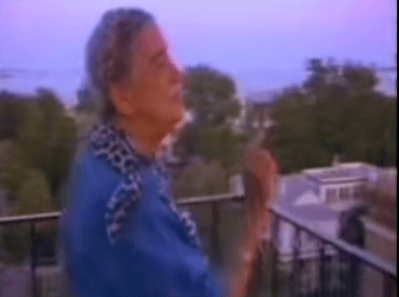
Bobby could make most anyone laugh but he loved making his mother laugh most of all. When he’d complement one of her outrageously elegant outfits and tell her how beautiful she looked, she’d dismiss him with the backhand flip of her wrist as if she didn’t take him seriously. The truth was they were very close, especially after his father passed away. Bobby would often take me to visit his mother’s upstairs apartment in the Calhoun Mansion after work where, often as not, we’d find her drinking an afternoon glass of red wine and playing the arcade-size pinball machine Bobby gave her. I don’t think she stood much over five feet Five as she shimmied and bumped the machine all the while fussing at Bobby for breaking her concentration with his jokes. This, of course, just egged Bobby on much to his mother’s delight. Watching the two of them interact I could see where Bobby got his looks, wit, and excentric personality from.
Bobby told me endless loving stories about his mother who he called the Muv. It’s funny sometimes how one-story melds with and grows out of another. I served on the Rural Mission’s Board for twenty-five years and was the Board member responsible for had organizing the Mission’s celebration honoring Marybelle Howe in 1987. I could hardly believe it when I found myself visiting with her in person. One of Bobby’s favorite stories about his mother was a story about a dinner with his sister, brothers, and father one evening back in the 1960’s after she’d visited a migrant workcamp on John’s Island. “I visited the camps today,” she began as if it was something ordinary people did every day. “Why don’t you tell us about it, Marybelle,” Bobby’s father, Gedney, replied knowing full well she she was going to anyway. “While I was there, I saw these poor migrant women washing their laundry in old timey tin wash tubs.” Gedney kept eating his dinner hoping that was the end of her story but knowing full well it wasn’t. “You know there’s fifteen families living in the camp and not a single washing machine for the whole camp.” Bobby said his father sighed and calmly put down his utensils, looked up, and asked, “Well. Marybelle, just how many washing machines did we buy today?” “Three,” she replied with a smile before waiting a second or two to add, “the dryers won’t be delivered ‘til next week.”
Marybelle Higgins Howe became involved with the migrants in the 1950’s as the President of Church Women United. Together with the Reverend Willis T. Goodwin they opened Camp Care on John’s Island to provide day care for the children of migrant farmworkers. Reverend Goodwin, or Steaker as Mr. Steinberg called him, helped organize the Black Churches during the civil rights era and was Mr. Steinberg’s political ally. Camp Care become the Rural Mission on Camp Care Road nestled next to Bohicket Creek on John’s Island. In addition to day care, the Mission grew to include a full-size kitchen, a Prayer Store for free food and clothes, and dormitories for Christian youth groups who came from all across the southeast volunteering labor and materials to repair dilapidated homes on John’s Island under the supervision of Anderson Mack. Each week the volunteers were treated to a John’s Island Crab Crack made with freshly caught crabs, sweet corn, and served with Ms. Viola’s mouthwatering low country sides and desserts for their hard work. Marybelle Howe’s work with migrant children helped establish the South Carolina Commission for Farm Workers.
Her activism wasn’t limited to migrants; she served as the founding chairperson of the Charleston County Commission on Economic Opportunity. All the while she served as a dedicated board member of the Charleston County Library for twenty-five years 25 years, serving several terms as the Chairman of its board of trustees. Today, there is a Marybelle Howe Reading Room in the downtown library in her honor. She also served on the Board of Women Visitors of the University of South Carolina. She knew absolutely everybody who was anybody in Charleston’s church, civic, and political communities. Another of Bobby’s favorite stories was how, when her team of MUSC’s finest doctors had gathered at her bedside during her final illness, she perked up enough to fuss at Senator Strom Thurmond on the telephone for interrupting her consultation much to her doctor’s astonishment. She was such an iconic Charlestonian for so many years in so many ways, the United States House of Representatives passed a Resolution in her honor when she passed. The United States Post Office located on East Bay Street is named in her honor.
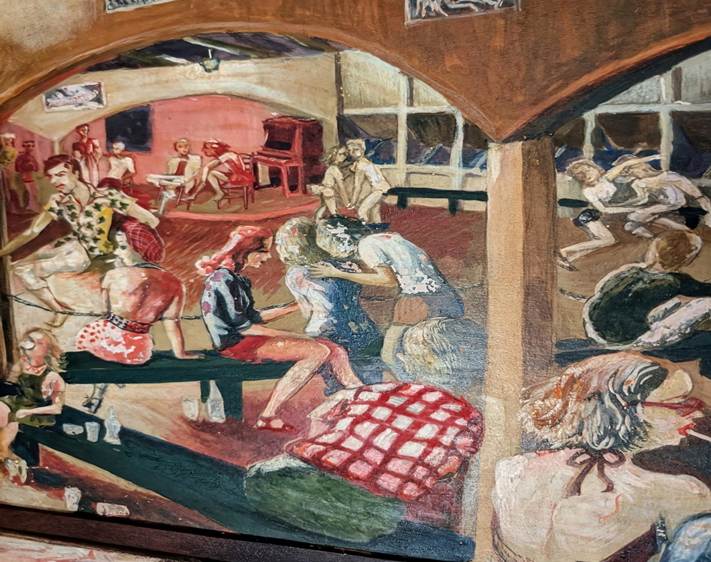
Her loss hit Bobby hard, so hard I worried for my friend. I was used to Bobby’s manic side but not the deep melancholy his mother’s death brought on. Bobby never talked much about his mother after she passed but I could see more and more of her in him in his dark complexion and bushy eyebrows as he aged. When Bobby knew he was dying, he gave me what he said was one of his most prized possessions. It was a painting of the Pawley’s Island Pavillion in the 1940’s by his mother’s brother, Uncle Don Higgins. He lovingly pointed out his mother wearing the red glasses in the lower right corner. I’ll just bet, in addition to her other amazing talents, the Muv was quite a jitter bugger back in her day.