

NRA Members for a Better NRA
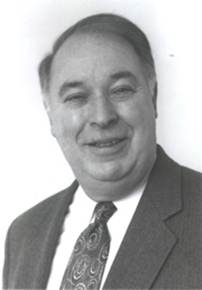
Charles J. Irwin
Fitzgerald v. National Rifle Association, 383 F. Supp. 162 (D.N.J. 1974)
Far as I know, nobody in my family was ever a lawyer before me. My father owned a trucking company and I thought his friend and lawyer, Charles J. Irwin, was about the coolest guy I’d ever met. Not at first because of his legal skills but because he drove a light metallic blue, convertible Jaguar XKE. He was the New Jersey State Senator for Union County who lived in a beautiful home in Mountainside, New Jersey where my father would sometimes take me to visit. I remember he had a trophy case full of memorabilia from when he and his beautiful wife, Dianna, were the National roller skate dancing champions. He was the first person to take notice of my desire to become a lawyer and invited me to attend an actual trial with him when I was still in high school. I still remember him turning to me with a smile and saying, “watch me pluck the feathers out of this turkey’s ass,” before doing just that to a witness on cross examination in the trial. He offered me a summer law clerk job after my first year of law school.
Problem was I was a student at Rutgers School of Law in Camden, New Jersey, across the river from Philadelphia, and his office law firm was located in Newark, across the river from New York City. Of course, I took the job and that meant I had to drive forty-five minutes each to the train station in Trenton, then ride the NJ Transit train another forty-five minutes to downtown Newark, and then walk the four or five blocks to his office . The experience was worth every minute of the commute to and from his office that summer each morning. Only to do it in reverse vat the end of every day. The experience working for Mr. Irvin that summer was worth every minute of the commute.
I was one of six law clerks that summer. Charlie, as we were instructed to call him, graduated from Harvard Law School and founded the very successful law firm of Irwin and Post. One of his memorable clients was Val Forgett, Jr., who made a fortune circumventing strict gun control laws by manufacturing replica muzzle loaded, black powder firearms. Mr. Forgett’s friend, Thomas Fitzgerald, didn’t think the NRA was conservative enough and wanted to run for office on the NRA Board. He tried to place an ad in The American Rifleman magazine supporting his candidacy, but the NRA rejected his ad. Charlie was hired to sue the NRA and assigned us as law clerks to work on the case.
As a 1L student I was one of the youngest and least experienced law clerks, so I was assigned to research the ways the NRA operated as a quasi governmental agent. I was surprised how much the State and Federal governments had ceded authority for the regulation of gun training and licensing to the NRA but ultimately that issue turned out to have no effect on the court’s favorable ruling. What I enjoyed most about the clerkship was the lunch sessions presided over by Mr. Irvin. He would order in lunch for everybody and we would all eat sitting around the large table in his conference room. Charlie would go around the table asking each law clerk for a summary of what they had done that morning. Then we’d all discuss whatever topic an individual law clerk was working on and Charlie would give insights on how best to proceed. The discussions were always interesting and animated. Almost every Friday, Mr. Irvin would distribute a new draft of our brief with editorial comments on where more work needed to be done. I was amazed how the brief came together as a group effort all of us were proud to have contributed to.
People generally, but law students too, think courtroom victories are attributable to brilliant lawyers, but, in reality, they are more often the result of the cooperative efforts of many lawyers working together. By the end of the summer and my clerkship that summer the brief was finished. I followed the case and Mr. Irwin’s career closely. He won the case on September 23, 1974 after I’d begun my second year of law school. The issue the Court relied on in granting relief was the NRA Board’s breach of the fiduciary duty to conduct fair and open corporate elections. The American Rifleman was forced to run the ad but Mr. Fitzgerald lost the election. Val Forgett graduated to manufacturing military jets for sale on the international arms market. Mr. Irvin was first appointed by the Governor as the first Director of the New Jersey Department of Consumer Affairs and later as the first Chairman of the Casino Development Authority when gambling was legalized in Atlantic City. Later he went on to represent sovereign Native American tribes to establish their own casinos across the nation. He was wearing western garb looking more and more like Gary Spence, the Wyoming lawyer, in the last picture I saw of him before he passed away in 2005.
I am sure my MAGA family and friends will be surprised to learn I began my career by helping sue the NRA for not being conservative enough. I didn’t go on become a Second Amendment lawyer but what I learned that summer working for Mr. Irvin was the importance of collaboration between lawyers in the real-life practice of law. No lawyer knows all the answers, can do it all themselves. Sadly today client’s cases are too often treated like commodities, traded by lawyers to other lawyers for a share of the fees generated without any thought of working together on the case. The cases suffer and the lawyers never learn to become better lawyers. I admire Charles J. Irwin today for so much more than his XKE but most of all for him teaching me working collaboratively with other lawyers can help you win impossible cases against seemingly invincible opponents.

