

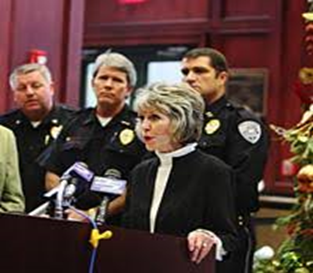
Assistant Solicitor Debbie-Herring Lash

Judge Daniel E. Martin, Jr.
There is so little thanks for lawyers who take on the fight against child abuse, there must be a special place for them in heaven. Most lawyers shy away from the heartbreaking work because they know, no matter how good a job they do, families will be torn apart, and scars will be left the legal system cannot possibly heal. Thankfully, there are a few lawyers who become committed to the necessary work, both as advocates and judges. Two such lawyers I worked with over my career were Assistant Solicitor Debbie Herring Lash and Family Court Judge Danny E. Martin, Jr. I worked with them on a protracted murder by child abuse case that started out in the Court of General Sessions criminal court as a murder case and ending up as a removal action in the Family Court. Despite the charge of homicide by child abuse, both Ms, Herring-Lash and Judge Martin kept an open mind and treated everyone caught up in the tragedy with dignity and respect. I call this my Pseudo Munchhausen-by-Proxy murder case because of the pseudo-science offered to support the charge of murder at trial. Families were torn apart, and scars were left that will never heal left, but because of Ms. Herring-Lash and Judge Martin’s dedication, justice was finally done.
It happened twice. Her son, still a toddler, stopped breathing and turned a deathly shade of gray. Alone and unable to speak English, his mother dialed 911 and frantically ran to the neighbors to speak for her. Thankfully, both times, the toddler recovered before EMS arrived. The second time, however, EMS took the mother and child to the hospital where the mother thought they were trying to find out what was wrong with her son. But the suspicion of child abuse had been planted and what they were actually doing was watching the interaction between the mother and child to see if the mother was making the child sick to gain attention for herself, a rare medical diagnosis called Munchausen by Proxy.
Nothing untoward was observed during the hospitalization, except for the mother telling the nurses her son slipped her grip while she took him with her to the bathroom, stumbled, and hit his head on the tiled bathroom wall leaving a small red bruise requiring no treatment. Observing no other questionable conduct, the hospital discharged the mother and her son with a home heart monitor for him to wear. Whether the mother couldn’t figure out how to put the monitor on properly, or the toddler figured out how to wiggle out of it, or the monitor never worked properly to begin with, the monitor either showed a normal heart rhythm or complete gibberish. That’s when the unthinkable happened and the toddler died one night in his crib. An overzealous DSS case worker, determined to make up for not acting sooner, urged the police to file the homicide by child abuse charge. The detective went along and swore out the warrant naming the case worker as his sole source for probable cause. The terrified mother was arrested, I was retained by her family, and the case was assigned to Assistant Solicitor Debbie Herring-Lash.
The specter of the crime alleged was enough to cause a sky-high bail bond neither the mother nor her family could afford. Ms. Herring-Lash, who was head of the child protective services unit, had more active cases than any lawyer could be expected to handle, so it’s hardly surprising the mother languished in jail for a long time before the case came to Ms. Herring-Lash’s attention. Once it did, it didn’t take long for Ms. Herring-Lash to notice the complete lack of corroborating physical evidence supporting the charge, no broken bones, scars, bruises, or forensic signs of abuse or neglect. The cause of death listed on the autopsy report was asphyxiation, but Ms. Herring-Lash was familiar with crib death and wasn’t persuaded it was murder. When she read the file and saw the mother didn’t have any criminal record, no history of substance abuse or mental illness, and both the child and his older brother had been seen for regular medical check-ups and were always found to be in perfect health, she instructed her investigator to dig deeper into the case.
When interviewed by the investigatyor, the detective said he was relying on the DSS caseworker. The case worker, in turn, said she was relying on the toddler’s breathing problems only occurring when he was alone with his mother and no medical condition having been found to explain his symptoms. To the DSS worker’s way of thinking the absence of evidence proved it was Munchausen-by-Proxy. The investigator reported back to Ms. Herring-Lash and added neither the caseworker nor the detective had interviewed any member of the mother’s family because they didn’t speak Spanish.
She didn’t have to, but Ms. Herring-Lash called me as the mother’s attorney to ask if I objected to her interviewing my client’s family. Now a lot of lawyers would have refused fearing some ruse to gather evidence against their client, but I knew Ms. Herring-Lash from prior dealings and not only agreed but offered to bring the family down her office to be interviewed. Ms. Herring-Lash wisely said no, she’d rather interview them in their home. I knew she was right and agreed to set it up.
The mother’s family lived in an old trailer park in the Hannahan area. The outside of the trailer looked run down, but the father and son had completely renovated the inside. It was immaculate, comfortably furnished, and nicely decorated. The mother’s room had been left undisturbed while she was in custody and, although cramped with beds for the mother and her two children, it too was organized, neat and clean. The whole family gathered for the visit. None of them spoke English but anyone with eyes could tell immediately how honored they felt by the busy prosecutor visiting their home. Ms. Herring-Lash’s investigator translated when the grandmother spoke for the family thanking Ms. Herring-Lash for coming and welcoming her into their home. After formal introductions all around and a proud tour of the trailer by the grandfather, Ms. Herring-Lash sat down in the living room with the family and started asking questions about the toddler. When she asked if they had ever witnessed the child stop breathing like the mother described they all shook their heads and replied no. I was worried by their response but Ms. Herring-Lash was experienced and asked a follow-up question, had they ever witnessed the toddler having any breathing problems at all? The family all started talking at once. The grandfather said he thought the boy had asthma. The grandmother thought he got overexcited and hyperventilated. An uncle who had done a lot of renovations on the trailer thought he might be allergic to the mold that permeated the old trailer. They all agreed he was allergic to something but couldn’t agree on what. Ms. Herring-Lash asked one final question, had the boy experienced any of his attacks when his mother wasn’t around. An aunt said she remembered he once had an attack when all the children were watching tv while the mother was out and everyone nodded their heads in agreement.
Ms. Herring-Lash spent a good hour in the family’s home. She’d seen and heard enough, thanked the family for meeting with her, and left with her investigator. I remained behind and told the family I didn’t know what she would do but felt good about the meeting. What she did was to dismiss the Murder by Child Abuse charge outright later that afternoon. The mother was released from the county jail that evening. I can’t say I did much more than believe in my client’s innocence in getting the charge dismissed and gladly give credit to Ms. Herring-Lash. I can say, however, I have had very few clients in my career who were ever so thankful. Ms. Herring-Lash is well known for her success in prosecuting child abuse offenders. She deserves to as well known for protecting innocents caught up in the system. Unfortunately, it wasn’t long after her release, we learned the mother’s ordeal was far from over.
The DSS caseworker was incensed the criminal charge had been dismissed without her agreement and brought a removal action on the theory the mother killing her younger son meant there was a risk of harm to his older brother. At the initial hearing DSS was willing to allow the child to remain in the mother’s home only on condition the mother was never left alone with the child and agreed to attend and successfully complete child abuse counseling. I knew from experience such a plea would leave my Spanish speaking mother at the whim of a therapist handpicked by DSS. She’d ultimately be caught in a catch 22; in order to successfully complete counseling, she’d have to admit killing her son which she adamantly denied. We agreed to mother and child would not be left alone to avoid temporary removal but rejected the plea and requested a trial. The temporary hearing judge accepted my alternative proposal and ordered the case to be placed on the trial docket.
The trial finally came to be heard before the Honorable Danny E. Martin, Jr., who I had never appeared before but, had practiced with his father, Daniel E. Martin, Sr., both when he was a Deputy Solicitor and later when he became a Circuit Court Judge. I figured if Judge Martin was anything like his father, my client would get a fair trial. My client wasn’t just unable to speak English; she was emotional being both Hispanic and a mother afraid of losing her remaining child in a legal system she neither understood nor trusted. The greatest lawyer that ever lived couldn’t have explained the reasons to her why this legal nightmare was back in court for trial. All I had was her trust in me as her lawyer until we appeared before Judge Martin. I don’t know if he sensed her apprehension or it was just his judicial temperament, but he took his time explaining the proceedings through an interpreter and that helped calm my client.
The Department of Social Services sent an attorney all the way from headquarters in Columbia to prosecute the case. The first thing he did was try to impress the judge saying the case had special importance to the South Carolina Department of Social Services because it involved Munchausen-by-Proxy. Judge Martin quickly disposed of any notion the lawyer may have had he would treat the case any different than any other. The DSS lawyer thought he’d lead off with his big gun, a Munchausen-by-Proxy expert whose rather threadbare credentials he laid out before offering her as an expert witness in the field of psychology. Many young lawyers have forgotten, when an opponent offers an expert, you can request to vior dire the expert about their qualifications before the judge admits their opinion testimony. Being able to raise doubts about expert’s qualifications before they testify is a valuable tool in a litigator’s toolbox. Apparently our expert wasn’t aware of the rule and, as I began my questioning, she avoided my questions and puffed herself up repeating her testimony about having a psychology degree from an Atlanta university. I wasn’t familiar with her university, so I looked it up. I asked her if her university was located on the third floor of an office building located off the interstate? She bristled when I produced copies of the school’s webpage, but reluctantly admitted the students took classes online. To fight back against my suggestion the school was less than accredited, she shot back that, in addition to her degree, she was licensed by the State of Georgia. I thanked her for her non-responsive answer but then forced her to admit she was only a licensed clinical psychologist, not a licensed psychologist allowed to administer psychological tests or assess psychological illnesses under Georgia law. She started squirming and lost eye contact with the DSS lawyer when I said I’d reviewed the school’s curriculum and hadn’t found any courses on Munchausen-By-Proxy. True to form, she chose not to answer my question and launched into a diatribe on how the basic knowledge she received from her university psychology classes qualified her to address the issue. Which only made it worse when she then admitted no such courses were offered. So, I asked, “Where did you get the education and training to qualify you as an expert in Munchausen-By-Proxy?” She replied smugly, “I attended a seminar on the topic and chose to focus my career on helping children affected by the disorder.” Upon objection, I withdrew my final question, “So you appointed yourself an expert in the field?” I concluded my vior dire and could see Judge Martin was concerned but, the legal bar for qualifying an expert being so low, he qualified her while reserving his right to rule on the admissibility of her opinions when she offered them. It wasn’t the ruling I’d hoped for, but I knew the damage to her credibility had been done.
The problem with sending a DSS lawyer from department headquarters to try a case is they’re probably a desk jockey and not a litigator. I just sat back and watched as the DSS lawyer fumbled his case. I don’t think he knew what a leading question was because, he asked so many of them, I gave up objecting, The reason I stopped objecting was because he wasn’t having any more luck getting the so-called expert witness to answer his questions than I had. She thought she could just give practiced textbook sounding answers to whatever questions she was asked much to the DSS lawyer and Judge Martin’s dismay. The DSS lawyer finally gave up out of frustration. Since I’ve danced with recalcitrant expert witnesses before, I kept my cross examination short and to the point. Her opinions set forth in her written report were based on facts provided by the case worker that had been investigated and rejected by the solicitor. In the end, when she wouldn’t concede, if her facts were wrong, then her opinions were probably wrong too, I knew I was done with her and so was Judge Martin.
The harder witness for me by far was the doctor from the Medical University of South Carolina who testified next for DSS. I accepted her qualifications as an expert without hesitation. Young lawyers too often think cross examination is a blood sport and don’t understand not all opposing witnesses are incompetent, uncaring liars. A lawyer should always ask themselves what the witnesses’ motive is for giving their testimony. The good doctor from the Med U was a highly skilled, intelligent, and caring physician. Her motive was solely a desire to prevent children from being abused or neglected in any form. She appreciated my acknowledging that fact in my opening cross examination. I stopped being a black hearted criminal defense attorney in her mind and she became much more willing to truthfully answer my direct questions. Like admitting she had no training or experience diagnosing or treating Munchausen-By-Proxy. She sheepishly admitted she was relying on the discredited Munchausen-By-Proxy expert for that opinion. She readily admitted doctors involved in child abuse purposefully cast a wide net to protect children but understood a judge’s job is more confined than that, as it should be. She tossed the causation issue right back into the lap of the so-called expert. I thought the good doctor was going to shake my hand on the way out of the courtroom.
The DSS lawyer didn’t understand the case was over already and his calling the case worker just made things go from bad to worse when I questioned her about how much money DSS had spent for the pseudo-Munchausen-By-Proxy expert’s testimony. Her hourly rate, even for driving time, her hotel room and expenses, added up to nothing short of outrageous. I noticed the detective who swore out the warrant had been waiting outside the courtroom to testify but was never called. Normally, a judge will take a case under advisement before issuing a decision, but Judge Martin had heard enough and dismissed the case from the bench finally ending my client’s nightmare.
I am often surprised when people comment on my trial stories wanting to know what happened to the people who caused so much hurt to my client. I explain that’s not my job, my job is help extricate my client from the nightmare. Those same people may wonder why I would praise Ms. Herring Lash and Judge Martin for doing their jobs. I praise them because their job is so hard and so often gut wrenching. So much so, too often judges, prosecutors, and others involved in the system can get jaundiced toward anybody charged with child abuse. I praise them because they didn’t let the murder charge prejudice them against my client and kept an open mind. It took a long time, and left deep scars, but both Assistant Solicitor Debbie Herring-Lash and Judge Daniel E. Martin, Jr. helped me do my job and helped free an innocent mother from being unjustly punished for a crime she did not commit.
 trialadvocacy.blog