

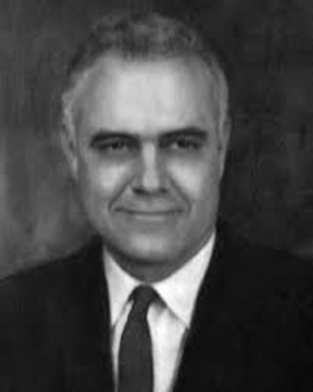
Senator T. Allen Legare
I first met Bobby Howe on the second day of the South Carolina bar exam in 1975. The tension in the air was palpable during the mid-day break when Bobby, a complete stranger, ran up to me and said, “If only I knew the difference between a garageman’s lien and a modis operandi, I’d have this bar exam licked.” I busted up laughing and we became instant friends. Little did I know then Bobby would later become the only client I ever had to be featured in The National Enquirer magazine. When Bobby once introduced me to Judge Ralph King Anderson as his lawyer, the Judge replied in an ominous voice, “that must be a gargantuan task.” And it certainly was but thankfully, I didn’t have to do iot alone. Bobby’s father, Gedney M. Howe, Sr., asked his dear friend and fellow lawyer, Senator T. Allen Legare, to watch out for Bobby after he was gone and I couldn’t have asked for a better co-counsel.
T. Allen Legare was always a fighter. He won the Southern Conference Boxing Championship in 1939. During World War II he parachuted behind enemy lines to blow up bridges and train tracks with the French resistance. I once asked how he could fool Germans with his heavy Charleston accent and he seriously replied, “There wasn’t any talking to Germans, we killed any of them unlucky enough to cross our path.” He graduated from USC Law School in 1941 and was a fixture on Broad Street for 69 years. He was Charleston’s State Senator and was instrumental in creating the South Carolina Port Authority making Charleston one of the main east coast ports. Even on the hottest days, young Broad Street lawyers knew better than to be caught by Senator Legare not wearing a tie and jacket on the street. He was the epitome of a Broad Street lawyer perfectly melding politics and the law.
One day, walking to the courthouse I ran into him with one hand on top of a parking meter and the other flailing furiously in the air. I asked, “Senator, are you okay?” He smiled and said he was on his way to a court hearing and was practicing being indignant. Semi-retired when I first worked with him, he would still come into his law office every day to read South Carolina’s major newspapers and answer correspondence. He fittingly lived below Broad in a beautifully renovated home on Legare Street and threw a yearly Frogmore Stew party for lawyers and judges on his Wadmalaw Island plantation. I never dreamed I’d get to work with him, but I did in two high profile cases both involving Bobby Howe.
The first case, my only case that made it into the National Enquirer, occurred when Bobby was caught digging up the backyard of an arrested Hilton Head Island drug smuggler looking for a 120-quart fishing cooler full of cash. Bobby had asked the prosecuting U.S Attorney if his client could receive a downward departure under the Federal Sentencing Guidelines for turning in a huge sum of money (presumably the contents of the cooler less Bobby’s fee) and had been told he could before Bobby set foot on the client’s property. The problem was the property had been seized by the Federal government as the fruit of the client’s lucrative smuggling business. When Bobby’s face appeared on the evening news and in the newspapers, Senator Legare reached out to me to offer his help.
I told Senator Legare I had Bobby checked into an out of state rehabilitation facility and he offered to persuade his friend, United States District Court Judge Sol Blatt, who also boxed for USC in the Southern Conference, to continue the case until Bobby could finish treatment. But nothing was ever easy about representing Bobby, and he stumbled over the first step of the facility’s twelve-step rehabilitation program. Instead of admitting his helplessness to overcome his addiction, Bobby told his counselor he was just hiding out until the heat died down back home in Charleston. Apparently this was deemed disruptive and the director of the facility was threatening to toss Bobby out of the program. I dreaded having to tell Senator Legare and, when I did, I thought the phone lines would melt between our offices. I was instructed in no uncertain terms I was to keep Bobby in the treatment facility. It was a test I needed to pass to earn Senator Legare’s respect and, believe me, it took everything I had to convince the director to at least give Bobby a mental health examination before discharging him. Thankfully, Bobby scored so far off the charts for a bi-polar disorder, he was transferred from the Addictive Disease to the Mental Health unit.
I thought the problem keeping Bobby in the facility had been solved but they were just the beginning. The first morning in his new unit, Bobby cracked to his new group, “Yesterday I was across the hall in addictive diseases, today I’m over here with you guys in mental health. I feel like I’m getting better already.” Apparently, getting laughs in group therapy is also considered disruptive. So is getting caught having sex with another inmate in the storage closet, getting caught unaccompanied in restricted areas, and also finagling a prized eggshell mattress cover from an orderly. They don’t teach classes in law school on how to keep crazy clients in rehab so you just have wing it. Fortunately, Bobby made friends with his psychiatrist and together his psychiatrist and I kept Bobby in the program. Loaded up with enough psychotropic medications to choke a horse, Bobby was finally discharged to face the music before Judge Blatt.
Judge Blatt was one of the finest jurists it was ever my privilege to appear before, but he was strict, especially in drug cases. Fortunately, he was also fond of Bobby who practiced law by a different set of rules. One of which was, if you can get the judge to laugh, he can’t send your client to jail. Most of what judges do everyday is anything but fun and a good laugh is always a welcome distraction. Bobby sure knew how to make Judge Blatt laugh but I doubted it was going to enough to save him from Judge Blatt’s wrath. Fortunately, as fond of Bobby as the judge was, he truly loved and respected Senator Legare. You could see the anguish on Judge Blatt’s face when Bobby appeared before him represented by Senator Legare.
The practice of law and politics was always personal to Senator Legare. A man’s word and loyalty to his friends meant everything to him. Before Senator Legare started speaking at Bobby’s guilty plea, I was felt certain Judge Blatt had made up his mind he needed to make an example out of Bobby. Senator Legare began, not with what Bobby had done, but at the bedside of Bobby’s father, Gedney M. Howe, Sr., also a renown Broad Street lawyer and also a dear friend of Judge Blatt. Senator Legare choked up with emotion describing how Big G on his deathbed grabbed his hand and made him swear he would look out for Bobby after he was gone. His vow to their mutual friend cut straight through to the judge’s heart while at the same time put the judge in an impossible position. Not one to ever do that to a friend, Senator Legare, seamlessly switched and began giving Judge Blatt a graceful way out. Senator Legare pointed out Bobby never found the cooler and never took anything, never lied about or tried to conceal what he’d done, and, misguided as it may have been, thought he was helping his client get a downward departure. More rthan that, Bobby had accepted responsibility and sought needed help by voluntarily entering a treatment program where he was diagnosed as being bi-polar and given needed medication. Judge Blatt couldn’t help but see the flashing yellow arrow to the exit ramp Senator Legare plowed for him and readily headed in that direction. So, he’s been discharged from the hospital? Yes, sir, he has but he remains under active medical treatment and supervision. And I can make it a condition of any sentence I might impose that he’ll continue such treatment and monitoring to make sure he continues to get help? Yes, sir, absolutely and your Honor knows I will continue to honor his father’s dying wish. Judge Blatt’s sentence of two years’ probation, with continued treatment and medication, but no referral for disciplinary action, was more than either Senator Legare or I could have hoped for.
A great result but it turned out keeping Bobby on probation wasn’t any easier than keeping him in the rehabilitation facility and it wasn’t long before Bobby got himself embroiled in another newsworthy spectacle. A young female law clerk working for Bobby’s brother alleged Bobby and a Circuit Court Judge Bobby’s brother wanted removed from the bench offered her cocaine in the bathroom at a party hosted by the Deputy Solicitor. Bobby flatly denied the allegation quipping, “I may be crazy, but I’m not stupid.” The Senate Judiciary Committee decided it needed to hold a hearings and issued a subpoena for Bobby’s appearance. While I advised Bobby needed to bide his time in an unknown location, I reached out to Senator Legare for his help a second time.
I delicately explained to Senator Legare Bobby there was no truth to this young lady’s allegation, but I was reluctant to open Bobby up to questioning under oath by the committee. Senator Legare asked how I proposed we allow Bobby to testify but limit the questions he could be asked? I explained Bobby would answer any question about the alleged incident without limitation, but asking him questions about other, unrelated matters would invade Bobby’s right to privacy, jeopardize his probation, and possibly affect his ability to continue to practice law. The argument was about as nuanced as a legal argument can be but Senator Legare, even in his mid-eighties, had a sharp legal mind. He loved our lengthly conversation about the right of privacy not being included in the Constitution’s Bill of Rights but being recognized by Justice William O. Douglas as being necessarily implied by the penumbra of the rights expressly guaranteed.
With Bobby in the back seat, I picked up Senator Legare and we set off driving to Columbia to meet with Senator Smith, Chairman of the Judiciary Committee. As good a lawyer as I might fancy myself to be, I fully acknowledge I never would have gotten a meeting with Senator Smith if it wasn’t for Senator Legare. We were greeted by Senator Smith like long lost friends which I sure the senators were. They exchanged handshakes and pleasantries before Senator Smith sat behind his desk and asked what he could for Senator Legare. Senator Legare got right to the point and got the same response from Senator Smith that I got from him when I suggested Bobby’s sworn testimonby could be restricted. Senator Smith asked skeptically, “Now Allen just how am I supposed to do that?” Senator Legare launched into such an impassioned argument for the right of privacy you’d have thought he’d discovered the right all by himself. Still Senator Smith was non-committal and said he’d have to speak with the other committee members. Senator Legare got up abruptly and turned to leave but stopped, turned back to the senator and barked, “If your brother was still alive, we wouldn’t even be having this conversation.” I have no idea what Senator Legare was referring to, but I could see it made a deep impression on the senator.
Still not knowing whether to risk allowing Bobby to testify, we decided to wait and see how things developed in the hearing. Senator Smith was the last to enter the chamber and take his seat. He began the hearing with an admonition to the other committee members he was not going to allow the hearing to become a circus and was going to limit all questioning strictly to the matters at hand to preserve the witnesses’ rights of privacy. Senator Legare nodded all would be okay and Bobby was sworn in as a witness. Bobby absolutely, unequivocally, and in no uncertain terms denied the allegation. In true Bobby fashion in no time he had the committee members laughing about the absurdity of thinking a sitting circuit court judge would be snorting cocaine with some unknown girl in the Deputy Solicitor’s bathroom.
Too many lawyers get to thinking too much of themselves. That only they can win a case. When I think back over my career, I think of all the great lawyers it has been my privilege to work and try cases with. Lawyers who helped me win way more cases then I ever would have won on my own. T. Allen Legare was one of the finest lawyers I have ever known and worked with. The epitome of a true southern gentleman. He honored a commitment he made to Bobby’s father and helped me win two high profile cases I couldn’t have won without him. All he ever asked in return was my respect, loyalty, and friendship all of which were gladly given.
 trialadvocacy.blog