

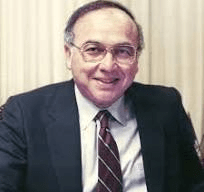
Senator Isadore E. Lourie
Marquard v. Columbia Pacific Mills,295SE2d 870 (1982).
The coroner, like all local elected officials in Richland County, was a personal friends of my first boss, Senator Isadore E. Lourie, or Chief as I called him. Chief was Speaker Pro Tem of the South Carolina Senate and Chairman of the Labor, Commerce, and Industry Committee that oversaw the administration of the workers’ compensation act. The coroner was present during the autopsy of Howard H. Marquard, a cotton mill worker who died suddenly of a massive heart attack. Mr. Marquard had worked in the card room of the Columbia Pacific Mills in Columbia, South Carolina where raw cotton was recieved into the mill. He suffered chronic, non-productive coughing fits and shortness of breath and had what was described as a “barrel chest.” What he suffered from was undiagnosed Byssinosis, more commonly called Brown Lung Disease, brought on by his years of exposure to raw cotton dust in the mill. The lay coroner commented in his autopsy report that Mr. Marquard had the worst case of brown lungs he’d ever seen. Senator Lourie promptly filed an occupational disease claim under the South Carolina Workers’ Compensation Act and the medical establishment went berserk.
We need to back up to help you understand the significance of this case to the working men and woman of South Carolina. The South Carolina legislature enacted the Workers’ Compensation Act in 1936 but, being mindful of the State’s economic dependence on cotton mills and the political power of the mill owners, deadlocked on whether to make occupational diseases compensable under the Act. It wasn’t until 1949, thirteen years later, that a compromise sufficiently draconian enough to prevent any cotton mill worker from ever receiving benefits was reached. The compensation killing compromise was that all questions concerning the existence or cause of a occupational disease, the degree of disability caused by the disease, and the proportion of disability attributable to noncompensable casues had to be referred to and determined by a Medical Panel of doctors hand picked by the cotton mill owners and appointed by the Governor. It would be another thirty-three years until the Marquard case was decided in 1982 before any cotton mill worker ever received any benefits.
When the medical professor of pulmonology at the Medical University of South Carolina, who also happened to be the chairman of the Medical Panel, heard of the coroner’s report, he fired off a lengthy medical report to the mill’s insurance company’s lawyers proclaiming no histological findings for byssisinosis had ever been documented in the medical literature and the coroner’s alleged observation of brown lungs was pure quackery. The defense lawyers promptly filed a motion for the case be referred to the Medical Panel for its kiss of death review. When it appeared the occupational disease claim for Mr. Marquard’s family required last rights, Senator Lourie assigned me to research the law and medical literature in search of a way around the Medical Panel. Unfortunately, my research indicated both the law and medical literature supported the referral.
But I was only few years out of law school and, not knowing any better, asked Chief, “Why didn’t you bring the claim as an accidental injury for his heart attack?” The Senator patiently explained Mr. Marquard wasn’t engaged in any work related activity that involved unusual strain, over exertion, or mental stress required in order for a heart attack to be compensable. With what little I’d learned about the insidious Brown Lung disease, I almost simplistically blurted out, “But his lung disease placed his heart under constant strain and over exertion.” The Senator’s instantaneous smile told me I might have hit upon something.
Senator Lourie went back to Mr. Marquard’s treating cardiologist and posed the question, “Well, doctor, did Mr. Marquard’s chronic obstructive lung disease caused by his employment place his heart under a constant strain or overexertion causing his heart attack?” “Why, yes,” the good doctor replied and Senator amended his claim to seek benefits under the accidental injury section of the Worker’s Compensation Act. A hearing was held and the Commissioner ruled Mr. Marquard’s heart attack was an accidental injury based on the treating cardiologist’s medical testimony, and, therefore, it was not necessary to refer his claim to the Medical Panel. The Commissioner awarded Mrs. Marquard and her children death benefits under the Act. The cotton mill and its insurance carrier appealled the decision all the way to the South Carolina Supreme Court and I was be assigned the task of writing the briefs responding to the medical establishment, business, and insurance industry’s briefs to reverse the decision.
Although I’d left to join the Steinberg Law Firm in Charleston when the case came up for oral argument, I wouldn’t have missed it for anything. Senator Lourie’s argument was magnificent. He attacked the very notion of the Medical Panel head on. He effectively argued the fact no cotton mill worker had ever been awarded benefits to sway the Justices. We, if I can claim some small part of the credit, won on every legal issue raised. Thereafter, an injured worker could elect to proceed under either as an occupational disease or accidental injury sections of the Act and an accidental injury claim did not have to be referred to the Medical Panel.
Marquard marked the beginning of the end of the Medical Panel that had so effectively thwarted the award of benefits in occupational disease cases. It also marked the beginning of my career expanding the rights of workers injured by occupational exposures to toxic chemicals, infectious diseases, and repetitive trauma. I owe a special note of gratitude to Senator Lourie because he, not only gave me my first job as a lawyer, but because he believed in my ability as a lawyer. He set me off on a very rewarding and satisfying career fighting for the rights of everyday people no matter how strong the forces were arrayed against them. After a forty year drought of compensation for occupational diseases, little old me, a lawyer still green behind the ears, helped the very first cotton mill worker in South Carolina to receive compensation for a Brown Lung related work injury.
 trialadvocacy.blog